REVIEW · SANTO DOMINGO DAY TRIPS
Guided Tour in the Colonial Zone of Santo Domingo
Book on Viator →Operated by Excursion guiada en la zona colonial · Bookable on Viator
Santo Domingo’s Colonial Zone hits different with a guide. You get an expert team certified by the Ministry of Tourism, plus language support so more people can follow the story. I like that it bundles real entry tickets at several key stops and keeps things moving with a clear, city-centered route. I also like the mix of monuments and meaning, from palaces and cathedrals to the first hospital in the Americas. One caution: you may not enter every site if a museum is closed that day or if certain stops are ticketed separately.
In This Review
- How the tour usually feels in real time
- Four fast reasons to book
- The Colonial Zone route: why this loop makes sense
- Price and value: what $65 actually covers
- Meeting point on C. Arzobispo Meriño: starting clean and easy
- Museum of the Royal Houses: power in 16th-century stone
- Primada de América and the Cathedral: Gothic in the Caribbean
- Ozama Fortress: quick exterior, big historical weight
- House of Tostado and the Elizabethan-Gothic detail
- Calle Las Damas and Calle El Conde: where the colony walked
- Parque Colón, San Francisco Monastery ruins, and the Dominican Convent
- National Pantheon and Hospital San Nicolás: politics and public life
- Alcázar de Colón and Casa Duarte: what’s optional on this run
- Rum and Cane Museum: the included stop with personality
- Group size and guidance: what to expect with a max of 50
- Timing and pacing: 3 hours that won’t exhaust you
- Should you book this Santo Domingo Colonial Zone tour?
- FAQ
- How long is the Guided Tour in the Colonial Zone of Santo Domingo?
- How much does the tour cost?
- Is there a group size limit?
- Where does the tour start?
- What museum tickets are included?
- Are any sites admission not included?
- Is lunch included?
- Can I get a refund if I cancel?
- What if the tour is canceled due to poor weather?
How the tour usually feels in real time
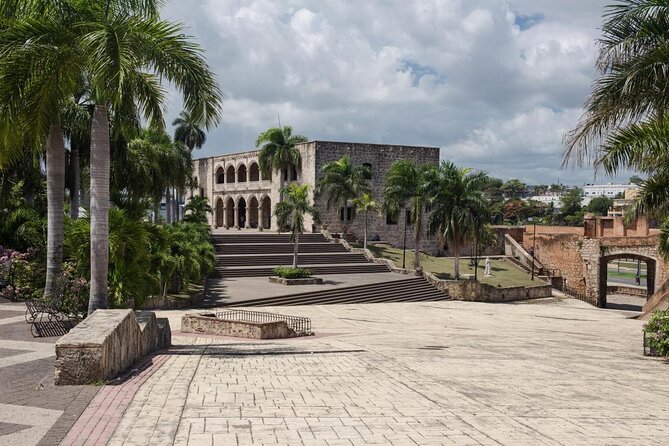
This runs about 2 to 3 hours in a group that caps at 50, so it’s not a tiny private thing, but it usually stays manageable. You’ll see a lot from the sidewalks and plazas, then slow down for a handful of indoor moments. If you’re lucky, you’ll meet a stand-out guide such as Angel, who has a knack for answering questions and making the details stick.
Four fast reasons to book
- Included tickets for several top stops, so you’re not constantly deciding what’s worth paying for.
- A tight Colonial Zone loop that works well even if it’s your first day in Santo Domingo.
- Multiple languages with Ministry-certified guides, which makes the history easier to follow.
- Good pacing for hot weather: short exterior stops, then focused time in major sites.
- Mix of power and daily life, not just churches and big views.
You can also read our reviews of more guided tours in Dominican Republic

The Colonial Zone route: why this loop makes sense
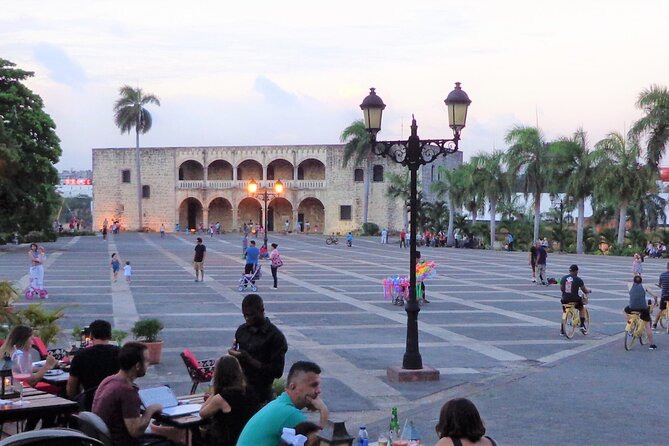
The best thing about this kind of guided format is that it keeps you oriented. The Colonial Zone in Santo Domingo can feel like one long tangle of streets and stone buildings unless you know what you’re looking for. This tour gives you landmarks with context: where Spanish authority was projected, where religious power grew, and where public life unfolded in plazas.
Even if you only have a half-day, you’re doing more than snapping photos. You’re learning how the pieces connect. Think of it like building a mental map: palace to cathedral, fortress to street, plaza to monastery ruins. Then the tour wraps back near the start point so you can keep exploring on your own right after.
One practical point: because the route is concentrated, comfortable walking shoes matter. You’re moving through uneven historic sidewalks and stopping often enough that you’ll want grip and cushioning.
Price and value: what $65 actually covers
The listed price is $65 per person, and the tour includes museum tickets at key sites. In the real world, that matters because Colonial Zone entry fees add up fast if you’re buying one-off tickets.
That said, you should treat the pricing as “value-focused,” not “everything is included.” Some stops are marked as ticketed separately (for example, Fortaleza Ozama, Alcázar de Colón, and Casa Duarte Museum). Others are free exterior views, like Calle Las Damas and Parque Colón, where you’re mostly learning from the guide.
If you want the most value, plan to be the kind of traveler who likes the guide’s selections and stays flexible. If you’re the type who wants control over every admission decision, you may want to compare costs for the ticketed sites you care about most.
Also, group discounts are mentioned, so if you’re traveling with friends, it can improve the per-person deal.
Meeting point on C. Arzobispo Meriño: starting clean and easy
You meet at C. Arzobispo Meriño 206, Santo Domingo 10210. That’s helpful because it’s a specific street address, not a vague “near the cathedral” spot. The tour ends back at the same meeting point, so you avoid that awkward scramble at the finish.
Because the meeting area is described as near public transportation, you can usually connect easily if you’re using local transit or walking from another neighborhood. If you’re coming by taxi, it’s still simple: give the driver the street and number.
Tip: arrive a few minutes early and be ready to show up as a group. With a cap of 50 people, the start tends to be the smoothest part when everyone is there on time.
Museum of the Royal Houses: power in 16th-century stone
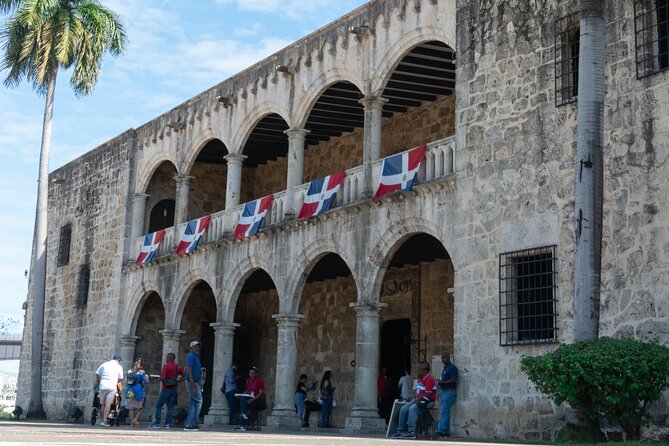
Stop 1 is Museo de las Casas Reales (the Royal Palaces). This site matters because it anchors the Spanish colonial power structure. The “Royal Houses” served as headquarters for the captaincy general and the province, and the building dates back to the 16th century.
Expect a guided walk through the spaces and stories behind that authority. You’ll get a sense of how political control was staged through architecture and museum interpretation. Since admission is included here, it’s one of the best-per-minute inclusions on the route.
Practical note: this museum is marked as ticketed on the tour. If you’re an “I only want included stops” traveler, this is one you should prioritize. I’d also recommend checking on the day that it’s open, because there have been reports of closures impacting the experience.






Primada de América and the Cathedral: Gothic in the Caribbean
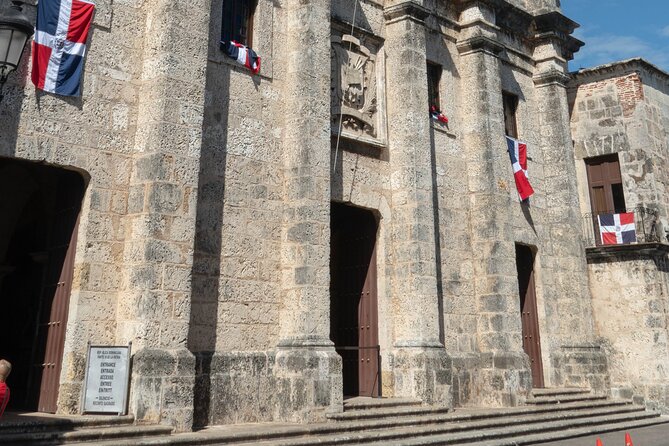
Next is Catedral Primada de las Américas de Santo Domingo. This is one of the anchor sights in the whole Colonial Zone. The cathedral’s architecture is characterized as Gothic, with ribbed vaults and solid walls, plus three doors with contrasting Gothic styles.
The stop is short, around 15 minutes, but it’s a smart use of time. You’re not trying to master every detail; you’re getting oriented to what makes this place distinct. If you like standing in a church and letting the scale hit you for a few minutes, this is a good stop.
Tip for photos: go a bit slower here than you think you need. Even in a quick stop, you’ll want a few angles of the façade and doors before your group moves on.
Ozama Fortress: quick exterior, big historical weight
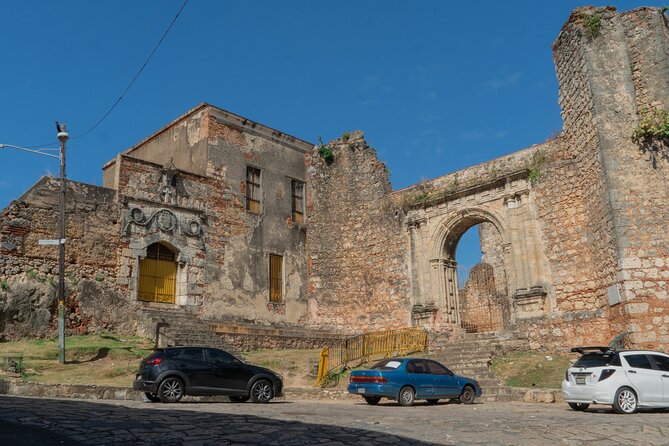
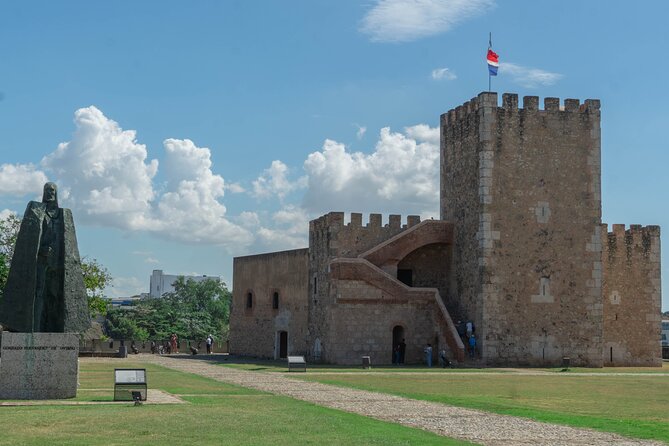
Then you hit Fortaleza Ozama. This one is listed as about 5 minutes, and entry is not included. But the fortress is historically significant as a Spanish colonial cultural monument in the Colonial City.
Even without going inside on this tour, you still learn what it represents. Fortresses like this were about control and protection, and they frame the coastline-and-city relationship that developed during colonization.
If you’re the type who enjoys fortifications, you might later return on your own to pay for entry. On this run, think of it as a quick context stop that sets up why the city’s stone looks the way it does.
House of Tostado and the Elizabethan-Gothic detail
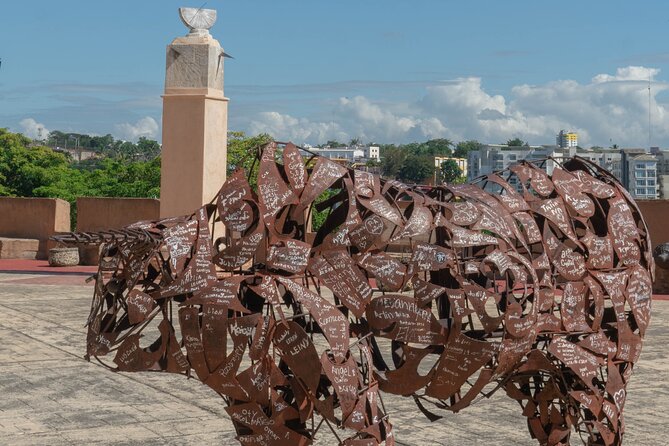
Stop 4 is House of Tostado (La Casa de Tostado Museum). The name connects to Francisco Tostado de la Peña, a notary public of the governor. The building is noted for its façade detail: a twin window in Elizabethan Gothic style, described as unique in America.
This is a classic “spot it, learn it, move on” stop. It’s only about 5 minutes, and entry is not included. Still, if architecture is your thing, you’ll appreciate the guide pointing out the specific elements that most people would walk past without noticing.
If you want more time inside later, add it to your personal plan. On a guided loop with multiple included tickets, this kind of short exterior stop keeps the schedule balanced.
Calle Las Damas and Calle El Conde: where the colony walked
After the museums and monuments, you’re back outside on the streets.
Calle Las Damas is Stop 5 and is described as the first street in Santo Domingo and America, named because ladies walked there at the beginning of the colony. It’s a quick stop, but it’s one of those details that turns a street into a story.
Then comes Calle El Conde, the Colonial Zone’s main commercial pedestrian street. You’ll likely spend around 10 minutes here. This isn’t just sightseeing time; it’s the “feel” of the neighborhood. You can see how the old city functions today, not only how it looked centuries ago.
Practical tip: this is also where you may naturally spot snacks, drinks, and small shops. If you have dietary needs, I’d plan ahead so you don’t waste your time later searching.
Parque Colón, San Francisco Monastery ruins, and the Dominican Convent
Stop 7 is Parque Colón, a historic plaza that served as a main party center in colonial-era society and is used today as a center for cultural activities.
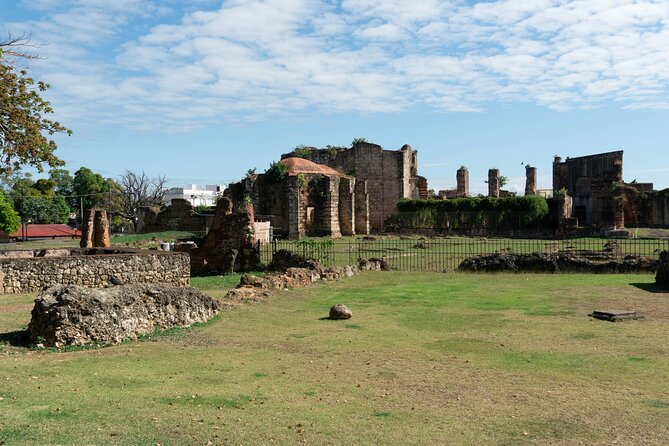
Stop 8 is the Monasterio de San Francisco, described as one of the most important ruins in the Dominican Republic and a World Heritage Site. Stop 9 is the Dominican Convent, noted as one of the oldest Catholic buildings in the American continent, connected to the earliest Catholic presence in the New World.
Both of these are largely quick exterior experiences here, around 5 minutes each. The value is the framing. When you understand what you’re looking at, even ruins feel less random. And the same goes for convent buildings, where the guide can explain why age and order matter.
If you’re traveling with someone who wants a slower pace, you can ask your guide where to linger after the group moves on. These stops are the easiest ones to extend with your own time.
National Pantheon and Hospital San Nicolás: politics and public life
Stop 10 is the National Pantheon (Panteón Nacional), described as the mausoleum of the nation’s heroes. Visiting the Colonial Zone with this stop included gives you a look at how the country narrates itself through monuments.
Stop 11 is Hospital Saint Nicholas of Bari (Hospital San Nicolás de Bari), described as the first hospital in America. Construction began in 1503 under Nicolás de Ovando.
These are two stops that broaden the story beyond cathedrals and palaces. They show how governance, memory, and even early healthcare got built into the city’s physical landscape.
The tour marks one of these as included with admission (Pantheon), and the hospital as free for the stop. Either way, the guide’s job is to connect them: who was honored, who was served, and how public institutions shaped the colony.
Alcázar de Colón and Casa Duarte: what’s optional on this run
Stop 12 is Alcázar de Colón (the Viceroyalty Palace). This one is ticketed separately (admission not included). It’s located in Plaza de España and dates to the early 16th century.
Stop 13 is Museo Casa Duarte, home of national hero Juan Pablo Duarte (born 1813). This is also shown as admission not included on the tour run.
Both are worth your attention, especially if you’re the kind of traveler who likes the personal side of national history. But since they’re not included, this tour works best if you go into it knowing you may pay a bit extra for the sites you care about most.
My practical advice: before you book, think about your priorities. If you’re strongest on Dominican independence stories, you might budget extra for Casa Duarte. If you’re strongest on colonial-era power buildings, plan extra time or tickets for Alcázar de Colón.
Rum and Cane Museum: the included stop with personality
Stop 14 is the Museo del Ron y la Cana (Rum and Cane Museum). This one is interactive and is included, and it tells the history of Dominican rum.
This is one of those stops that can surprise you in the best way. People often expect a “church and palace” tour, but rum and cane history connects to labor, trade, and culture. Even if your Spanish is basic, an interactive museum usually gives you something you can follow through visual displays and guided explanations.
Time-wise, it’s about 20 minutes, and that’s usually enough for you to get the main story without feeling dragged.
If you want the most satisfying souvenir moment, this is often where it makes sense to pause before you head back out into the streets.
Group size and guidance: what to expect with a max of 50
The group cap is 50 travelers, and the tour offers guides in several languages. That’s not a private tour, but it also isn’t a huge bus crowd. The goal seems to be “structured walking with enough explanation.”
If you care about asking questions, this is where your guide matters. One guide name that stands out is Angel, described as supportive, patient, and friendly, with strong answers. If you get a guide like that, the tour goes from facts to understanding.
If your group is larger, ask your guide early how they’ll handle questions and where to gather for the next stop. A little clarity prevents the usual street-crowd confusion.
Also, service animals are allowed, so you’re not forced into a “no pets” situation.
Timing and pacing: 3 hours that won’t exhaust you
The duration is listed as about 3 hours (approx.) with a route that includes brief exterior stops and several included admissions. The time allocation shows the pattern:
- Longer focus at Museo de las Casas Reales
- Shorter time at major architecture points like Primada de América
- Quick photo and context stops at streets, fort exteriors, and monastery ruins
- A included indoor moment at Museo del Ron y la Cana
That balance is what makes the schedule workable. You get enough indoor time to justify tickets and enough outside time to feel the city.
If you’re planning another activity later, give yourself some buffer. This tour ends back at the start point, so you can continue walking. But it’s still best not to chain back-to-back long museum days immediately afterward.
Should you book this Santo Domingo Colonial Zone tour?
Book this tour if you want a guided first-pass through the Colonial Zone with several key admissions covered and a realistic 2 to 3 hour pace. It’s a good choice when you like learning in context rather than wandering and guessing.
Consider skipping or modifying your plan if:
- You hate short stops and would rather linger in fewer sites.
- You’re only interested in the museums that have admission not included (like Alcázar de Colón and Casa Duarte).
- You’re sensitive to day-of closures and need guaranteed entry to every single indoor site.
If you do book, go in with a simple strategy: let the guide steer you through the included ticket sites, then decide on the optional paid stops based on what you care about most.
FAQ
How long is the Guided Tour in the Colonial Zone of Santo Domingo?
It runs about 3 hours on average (approximately 2 to 3 hours).
How much does the tour cost?
The price is $65.00 per person.
Is there a group size limit?
Yes. The tour has a maximum of 50 travelers.
Where does the tour start?
The meeting point is at C. Arzobispo Meriño 206, Santo Domingo 10210, Dominican Republic.
What museum tickets are included?
Museum tickets are included for the Museum of the Royal Houses, the Rum and Cane Museum, and admission for major cathedral sites (including the Metropolitan Cathedral/Primada) and the National Pantheon.
Are any sites admission not included?
Yes. Some stops are listed as not included for admission, such as Fortaleza Ozama, House of Tostado, Alcázar de Colón, and Museo Casa Duarte.
Is lunch included?
No. Lunch is not included.
Can I get a refund if I cancel?
Free cancellation is offered up to 24 hours in advance for a full refund. If you cancel less than 24 hours before the start time, the amount paid is not refunded.
What if the tour is canceled due to poor weather?
If it’s canceled due to poor weather, you’ll be offered a different date or a full refund.