REVIEW · DOMINICAN REPUBLIC
Half Day Excursion Colonial Zone, Faro to Colón, 3 Eyes Park
Book on Viator →Operated by Coprixa Travels · Bookable on Viator
Santo Domingo in half a day means you need a plan. This Colonial Zone excursion stitches together the most important UNESCO-listed sights in the capital and then adds a natural break at Los Tres Ojos, so the time doesn’t feel like a blur. I like that it’s built around a clear sequence of landmarks with enough guide time to explain what you’re seeing, not just point and go.
Two things I especially like: the no-rush pacing at each stop and the way the monuments connect into one story about the city’s power, faith, and legacy. One thing to consider is that this tour leans on walking and includes an hour at the Columbus Lighthouse area, so plan for a steady pace and make sure the weather cooperates.
With a small cap of 20 people and admission tickets included along the route, it’s one of those rare half-day options that feels like real sightseeing value instead of a quick drive-by.
In This Review
- Key highlights at a glance
- From Parque Colón to Los Tres Ojos: the timing that makes this work
- Start at Plaza de la Hispanidad, then step into the Colonial City at Parque Colón
- A practical consideration
- Cathedral Primada de las Américas: faith, architecture, and a quick visit that still lands
- What to watch for in your visit
- The National Pantheon: powerful storytelling in a compact stop
- Drawback to consider
- Museo de las Casas Reales + Alcázar de Colón: colonial power, not just old stones
- A smart way to experience these two stops
- Faro a Colón (Columbus Lighthouse): the cross shape and the scale you can feel
- Consideration before you go
- Parque Nacional Los Tres Ojos: four lakes and a breather from the streets
- Why this finish is valuable
- What you actually get for the $75 price
- Group size, guides, and the real-world feel of the day
- A small scheduling reality
- Who should book this half-day Santo Domingo Colonial City tour
- What to do before you go
- Should you book this tour?
- FAQ
- FAQ
- How long is the excursion?
- What does the tour cost?
- Where does the tour start and end?
- What stops are included?
- Are admission tickets included?
- How big is the group?
- Is the tour suitable for people with mobility concerns?
- What happens if the weather is bad?
- What is the cancellation window for a full refund?
Key highlights at a glance
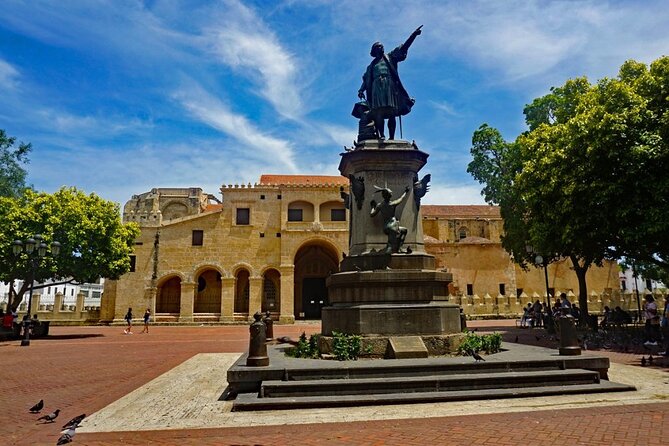
- Parque Colón as your orientation point: you start right in the Colonial City’s central recreation space.
- Catedral Primada + National Pantheon: two major sites tied to faith and national memory.
- Museo de las Casas Reales + Alcázar de Colón: a smart look at Spanish colonial power at 16th-century scale.
- Faro a Colón (Columbus Lighthouse): a cross-shaped monument with striking size and symbolism.
- Los Tres Ojos National Park: four lakes and a quieter, nature-focused contrast to the city streets.
- Small-group feel (max 20): enough attention to keep the tour informative without feeling crowded.
From Parque Colón to Los Tres Ojos: the timing that makes this work
This is a half-day circuit designed to fit into a tight schedule, about 4 hours in total. That’s long enough to get a real sense of Santo Domingo’s Colonial City highlights, but short enough that you’re not stuck all day in transit and lines.
What makes the timing work is the stop structure. You get multiple quick-but-meaningful visits (often around 15 minutes each) before finishing with a longer, nature-focused stretch at Parque Nacional Los Tres Ojos. The overall route is also tied to a logical geography: you start in the heart of the Colonial City and end with the parks outside that dense core.
Also worth noting: admission tickets are included for the listed stops. That reduces decision fatigue on the day, and you spend more time on the sites instead of hunting for tickets.
You can also read our reviews of more tours and experiences in Dominican Republic.



Start at Plaza de la Hispanidad, then step into the Colonial City at Parque Colón
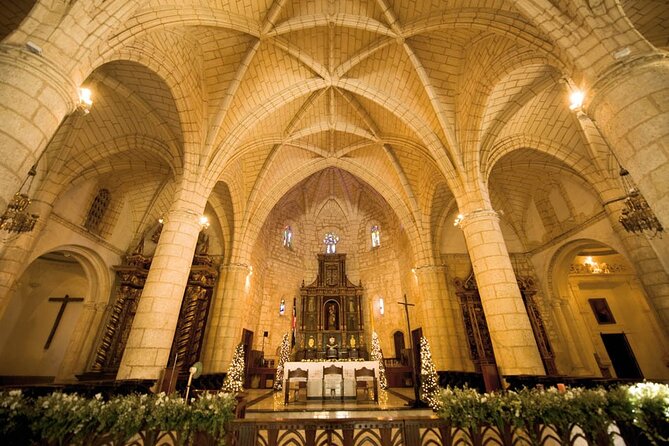
Your meeting point is Plaza de la Hispanidad (Spain) at SpainC. La Atarazana 2, Santo Domingo. The tour ends back at the same spot, which is a small detail that matters more than you’d think on a half-day. You avoid the hassle of figuring out your next move when you’re done.
The first stop is Parque Colón, described as the epicenter of the Colonial City and a central recreation space. In practice, this is a great way to begin because the area is already packed with notable monuments. It’s easier to understand the layout when you start near the dense cluster rather than wandering in from farther out.
In other words, Parque Colón acts like your launchpad. You get your bearings fast, and your guide can tie later buildings back to the space where everything feels connected.
A practical consideration
The stop time here is listed at 15 minutes, so don’t expect a slow soak-in. Instead, treat it as your orientation moment: look around, ask questions if you have them, and let the guide set the historical context before you move deeper into the sites.
Cathedral Primada de las Américas: faith, architecture, and a quick visit that still lands
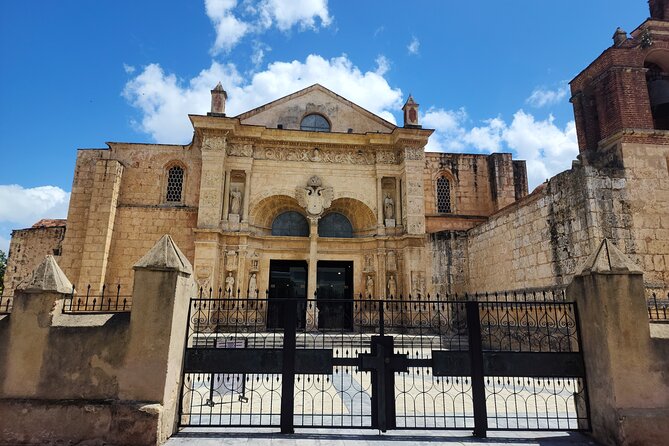
Next up is Catedral Primada de las Américas de Santo Domingo, a cathedral and minor basilica in the Colonial City. It’s consecrated to Saint Mary of the Incarnation, also known as the Annunciation, which gives you a clear lens for what you’re seeing.
This is one of those places where even a short visit can feel satisfying—because the setting does part of the work for you. The building is a focal point in the Colonial City, so your mental picture of the area becomes sharper right away.
The stop is scheduled for about 25 minutes, including the time you’ll spend on the most important viewing points. If you’re the type who likes to read a few key facts and then look at the structure with new eyes, this timing is a good match.
What to watch for in your visit
Aim to spend your time between three things: the dedication theme (Annunciation), the cathedral’s role in the Colonial City, and how it fits into the surrounding heritage area. The guide’s job here is to keep you from treating the visit like a checklist.



The National Pantheon: powerful storytelling in a compact stop
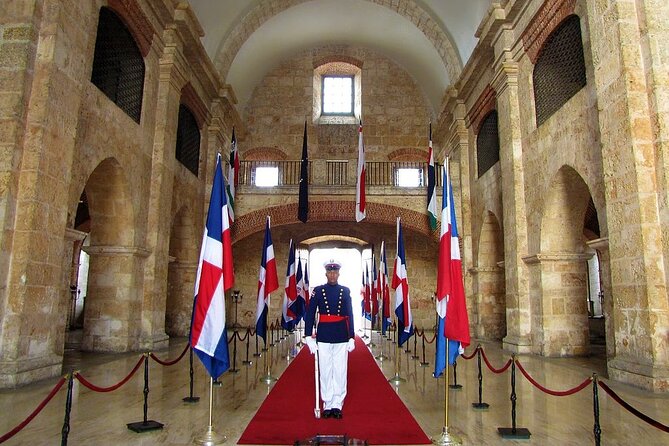
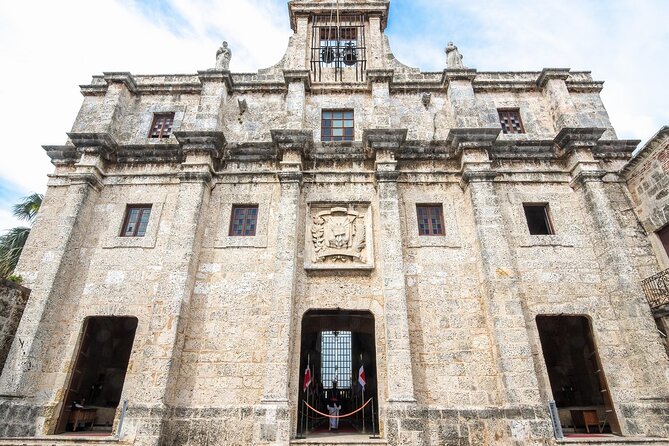
After the cathedral, you head to the National Pantheon, a mausoleum area preserving the mortal remains of prominent figures in Dominican Republic history. One detail given is that the enclosure has around 36 empty space areas. That kind of design choice sticks in your mind because it hints at the passage of time and the way nations shape remembrance.
Your time here is listed as 15 minutes. That might sound short, but mausoleum sites often work well in a short window because you aren’t “using” the space the way you would in a museum. It’s more about guided interpretation: who is remembered, why it matters, and how the site connects to national identity.
Drawback to consider
If you’re the kind of person who loves lingering to read every label, you may wish you had longer. This tour prioritizes coverage, not deep solo exploration. You’ll get the meaning—just not the leisurely browsing pace some visitors might prefer.
Museo de las Casas Reales + Alcázar de Colón: colonial power, not just old stones
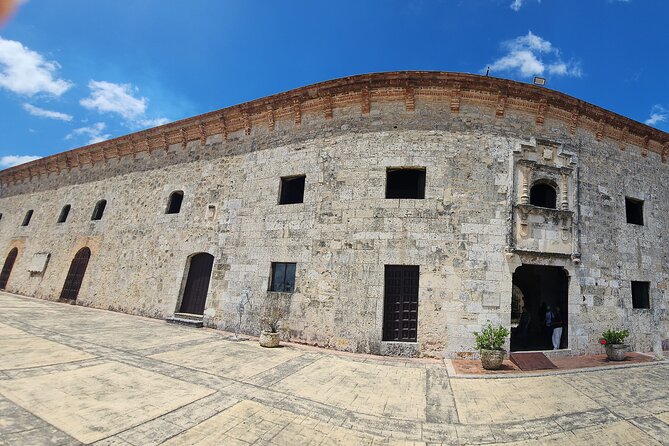
Two of the most historically loaded stops on the route are Museo de las Casas Reales and the Alcázar de Colón.
At the museum, you’ll be in the Museum of the Royal Houses, originally the Royal Palaces at the time of the Captaincy General and the province. The museum is based in two palaces dating from the 16th century, built by order connected to the Captaincy General and province (as described in the tour information). This matters because the setting isn’t a later “museum box.” You’re walking through spaces that are part of the story.
The time at the museum is about 15 minutes, so treat it like a guided highlights pass. If you want a deeper museum experience, consider pairing this tour with a longer museum visit later on your trip. But for getting your bearings in colonial governance and architecture, it’s efficient.
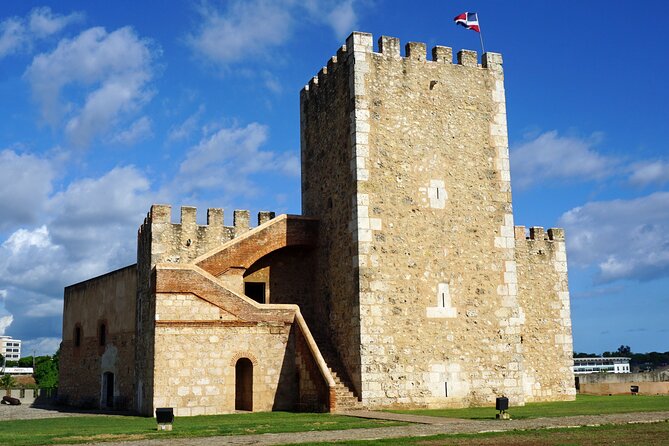
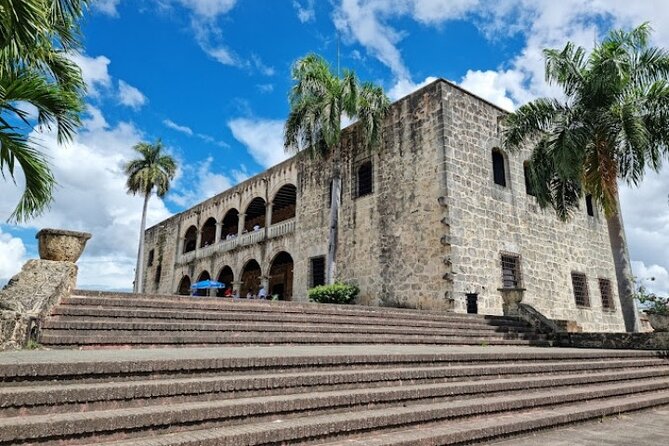
Then comes the Alcázar de Colón, also tied directly to Christopher Columbus through the building’s association. The tour notes it was erected between 1511 and 1514, inspired by a previously existing castle design from Mancera de Abajo, Salamanca (Spain), with vestiges of ruins still present there.
That mix—New World association plus Old World design influence—is exactly the kind of connection that makes the Colonial City feel less like a list of attractions and more like a system of ideas and power traveling across oceans.
The Alcázar stop is scheduled for 25 minutes, giving you enough time to let the guide explain both the local context and the design inspiration.
A smart way to experience these two stops
When you move from the museum to the Alcázar, pay attention to what feels official vs. what feels residential or symbolic. Both are tied to power, but they communicate it differently. The guided time helps you see that contrast without needing to be a history major.
Faro a Colón (Columbus Lighthouse): the cross shape and the scale you can feel
Next is the Columbus Lighthouse, also called Faro a Colón. The tour description gives two standout elements: its cross shape, symbolizing the Christianization of the Americas, and its scale—about 800 meters long and 36.5 meters high.
That size changes the feel of the stop. Even if you only have about 1 hour, you’re not just looking at a monument in isolation—you’re dealing with something that dominates the area. The symbol (a cross) also helps you interpret why this monument exists as more than architecture. It’s ideology made visible in the landscape.
The stop is listed at 1 hour, which is the longest segment on the route before the final park. That extra time is likely what keeps the lighthouse from feeling rushed compared with the other heritage stops.
Consideration before you go
Because it’s a time-intensive stop, think of this hour as the moment to slow down a bit. If you’re the type who takes lots of photos, you’ll likely want that time cushion for photos plus explanation. If you’re not, you can still use the time to ask questions and absorb the symbolism.
Parque Nacional Los Tres Ojos: four lakes and a breather from the streets
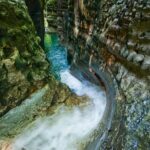
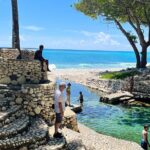
You finish with Parque Nacional Los Tres Ojos, a national park described as holding one of the city’s well-kept natural secrets, centered on four distinct lakes.
The provided description lists them in a simple way:
- Sulfur Lake, first lake you see when entering the park
- Plus three other lakes within the same park system
The scheduled time is about 1 hour. This ending makes sense. After several heritage sites packed with meaning, you get a break where the “story” becomes water, nature, and a different pace of walking.
Why this finish is valuable
It’s not only for scenery. It changes how your brain processes the day. Heritage tours can blur together, especially in a compact route. By the time you reach Tres Ojos, you’re usually ready for a reset—space to look, breathe, and let the city’s historical intensity cool off.
What you actually get for the $75 price
The price is $75.00 per person, and the tour typically gets booked about 9 days in advance on average. Group discounts are included, and it runs as a small-group experience with a cap of 20 travelers.
Here’s the value logic I see: in a four-hour excursion, the biggest hidden cost for many tours is admissions. This one includes admission tickets for every listed stop. That means your total spend is easier to estimate and you’re less likely to run into “surprise fee” moments.
Also, the route includes both major built heritage and a natural park. That’s a lot to cover in half a day, and it’s usually where tours earn their keep: not by adding extra stops for the sake of it, but by keeping the route efficient and interpretable.
If you want the UNESCO-style highlights without committing a full day, this pricing looks pretty reasonable for what’s included—especially with tickets already handled.
Group size, guides, and the real-world feel of the day
Your group size is capped at 20 travelers, which is a sweet spot for this type of route. You can hear explanations, and you won’t feel like you’re trapped in a giant bus tour.
The guide experience seems to be a major factor in how people rate the tour. One highlight you can take seriously is the combination of Fernando as guide and Ricardo as trip manager. The vibe described is friendly, comfortable, and unhurried, with the guide taking time at stops rather than forcing a rush.
That matters because the itinerary is made up of multiple short visits. The only way that works is if your guide can keep the momentum gentle and the explanations clear.
A small scheduling reality
One note from the experience data is that groups may combine on the day, which can change the exact group feel and sometimes the language mix. If English is important to you, confirm it when you book and be prepared for slight variation depending on the day’s staffing and combinations.
Who should book this half-day Santo Domingo Colonial City tour
This tour is best for you if:
- You want a guided highlights pass through Santo Domingo’s Colonial City rather than solo wandering.
- You like museums and monuments, but you don’t want a full-day time commitment.
- You prefer a route that includes both heritage buildings and nature in one outing.
- Your fitness level is moderate and you’re fine with short walks between stops.
You might skip it if:
- You want deep museum time and lots of independent browsing.
- You strongly dislike structured schedules and prefer longer, slower stays at fewer places.
- You’re sensitive to walking and standing for the duration of a half day.
What to do before you go
Because the experience calls for good weather, check conditions ahead of time. If weather looks questionable, it’s smart to have a flexible plan for that day.
Beyond that, treat it like an urban heritage day:
- Wear comfortable shoes for repeated short stops.
- Bring something simple to stay hydrated and focused (even if the tour includes admissions, you still need basics for walking).
Should you book this tour?
If you’re trying to choose between “seeing a few famous things” and “getting a guided sense of how the whole Colonial City connects,” this one is a solid pick. The biggest reason to book is the combination of included admissions, a compact route that covers key icons, and a finishing stop at Los Tres Ojos that makes the day feel balanced instead of purely historical.
I’d book it if you value a calm pace and good explanations, especially with guides like Fernando and trip management like Ricardo that keep you comfortable through the day. If you’re the kind of traveler who needs long, independent time in each site, plan to do follow-up visits later in your trip.
FAQ
FAQ
How long is the excursion?
It runs for approximately 4 hours.
What does the tour cost?
The price is $75.00 per person.
Where does the tour start and end?
It starts at Plaza de la Hispanidad (Spain), at SpainC. La Atarazana 2, Santo Domingo 10212, and ends back at the same meeting point.
What stops are included?
The tour includes Parque Colón, Catedral Primada de las Américas de Santo Domingo, National Pantheon, Museo de las Casas Reales, Alcázar de Colón, Columbus Lighthouse (Faro a Colón), and Parque Nacional Los Tres Ojos.
Are admission tickets included?
Yes. Admission tickets are listed as included for each stop on the route.
How big is the group?
The maximum group size is 20 travelers.
Is the tour suitable for people with mobility concerns?
It’s listed as requiring a moderate physical fitness level.
What happens if the weather is bad?
The experience requires good weather. If it’s canceled due to poor weather, you’ll be offered a different date or a full refund.
What is the cancellation window for a full refund?
You can cancel for a full refund up to 24 hours in advance. If you cancel less than 24 hours before the start time, the amount paid is not refunded.