REVIEW · HISTORICAL TOURS
Historical Tour in the Colonial Zone
Book on Viator →Operated by Coprixa Travels · Bookable on Viator
Santo Domingo’s stonework tells stories fast. This 90-minute Colonial Zone walk is a tight, guided loop through the UNESCO-listed core, where you’ll look at famous monuments and learn how they connect. I like that it’s structured enough to keep you oriented, yet flexible enough for real questions from the sidewalk.
Two things I especially like: first, you get clear context at major stops, not just dates on a sign. A guide like Medina (from recent visitor comments) tends to explain what you’re seeing in plain language and then adds practical ideas for other places you might want to visit next. Second, I like the value of the format: a small group (up to 15) for a full walking circuit, with a guide doing the hard work of pacing, pointing, and storytelling.
One consideration: a couple of the big sights have admission not included, so you may want to budget a bit extra depending on which interior areas you plan to enter. Also, since this is a walking tour in good weather, you’ll want comfortable shoes and a light rain plan.
In This Review
- Key things to know before you go
- Value for $25: what you actually get in 90 minutes
- The smart start: meeting at the Museum of the Royal Houses
- Parque Colón: the Colonial Zone’s public square energy
- Catedral Primada: what to notice at one of the region’s major churches
- National Pantheon: the politics of memory in stone
- Museo de las Casas Reales: two 16th-century palaces, one clear theme
- Alcázar de Colón: Columbus’s palace with Spanish roots
- How the small-group pace works on real streets
- What the guide should do for you (and why Medina comes up)
- Admissions and time: plan your money and your priorities
- Weather and comfort: small prep, big payoff
- Who this tour is best for
- Should you book this Colonial Zone walking tour?
- FAQ
- How long is the Colonial Zone historical walking tour?
- What does the tour cost?
- Is the tour admission-free for all stops?
- Where does the tour start and end?
- How large is the group?
- What happens if the weather is bad?
Key things to know before you go
- UNESCO-focused walk through Santo Domingo’s Colonial City core.
- Small groups (max 15) make it easier to ask questions and keep a steady pace.
- Guide service is included, and a guide like Medina is specifically praised for clear explanations.
- Some admissions aren’t included, so check what you want to enter before you start.
- Mobile ticket convenience helps you get to the meeting point and go.
Value for $25: what you actually get in 90 minutes
At $25 per person for about 1.5 hours, the best way to think about this tour is not as a museum ticket, but as time you buy back. In the Colonial Zone, the buildings are the point, but the meaning isn’t obvious unless someone puts it into context. That’s what you’re paying for: a guide who links the stops together so the area doesn’t feel like a random pile of old stone.
You also get a practical group size. With a maximum of 15 people, you’re not stuck watching a guide from the back row. You can see details when the guide points them out, and you have enough mobility to move with the pace without feeling rushed.
Finally, the price pairs well with a first-day strategy. If Santo Domingo is new to you, this kind of walk helps you get your bearings fast—where the big monuments sit, how the neighborhood flows, and what you might want to revisit later at your own pace.
You can also read our reviews of more historical tours in Dominican Republic
The smart start: meeting at the Museum of the Royal Houses
The tour starts at the Museum of the Royal Houses on C. Las Damas, in the Colonial Zone. Starting here matters because it sets the theme right away: this area is about power, administration, and the early Spanish colonial world. You’re not just walking past famous facades—you’re beginning in a place that connects to the larger story you’ll hear as you move along.
The tour ends back at the meeting point, which is helpful if you plan to continue exploring the neighborhood afterward. You can also use the museum area as a reference point when you’re coordinating dinner or looking for another site on your own.
They use a mobile ticket, which is a nice time-saver. Instead of hunting for paper or trying to figure out where to stand at the start, you can keep things simple: show your ticket on your phone and wait near the museum entrance area.
Parque Colón: the Colonial Zone’s public square energy
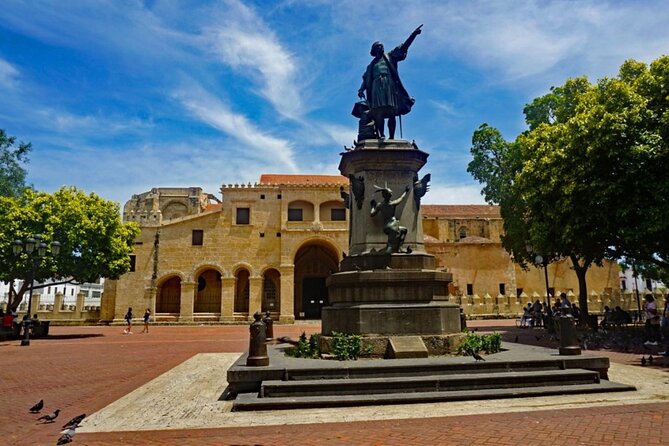
You begin at Parque Colón, the center of the Colonial City’s public space. This stop is short, but it’s a good one because it’s a place where the monuments cluster together. In other words: you’re not walking into history blindly. You start where the landmarks visually group, so your brain can map the area quickly.
What I like about a start like this is how it helps you “read” the neighborhood. Even if you don’t go inside every building on the walk, you start recognizing the layout: where the religious power sits, where the civic or state buildings appear, and how the later monuments relate to the earlier Spanish foundation.
If you’re taking photos, this is also an easy zone to frame wide shots, because you’re standing in a space designed for gathering rather than a tight lane with awkward angles.
Catedral Primada: what to notice at one of the region’s major churches
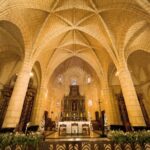
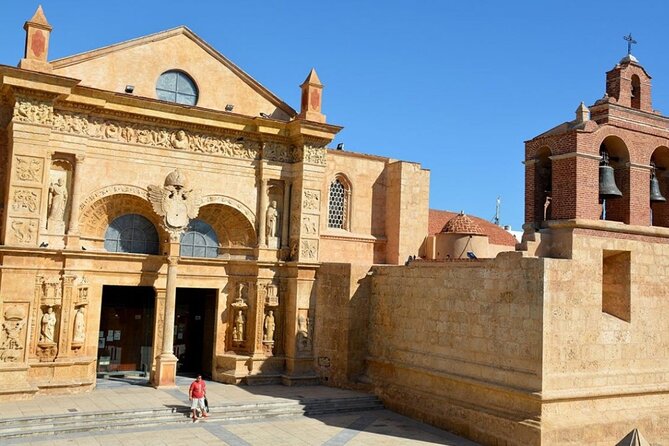
Next up is the Catedral Primada de las Américas de Santo Domingo. The name alone signals the scale. This cathedral is consecrated to Saint Mary of the Incarnation—also known as the Annunciation—and it’s identified as both a cathedral and minor basilica.
Admission for the cathedral is not included, so plan for that if your goal is to go inside. Even if you only spend time at the exterior or in areas allowed on the stop, this church is one of those structures where you can feel the weight of time. It’s the kind of building that makes you look up and slow down, because the architecture invites it.
A practical tip: if you want the most from this stop, decide ahead of time whether you’ll pay to enter. The tour gives you about 20 minutes here, so it’s not a long “wandering” window. Having your plan set helps you avoid losing time figuring things out mid-stop.
National Pantheon: the politics of memory in stone
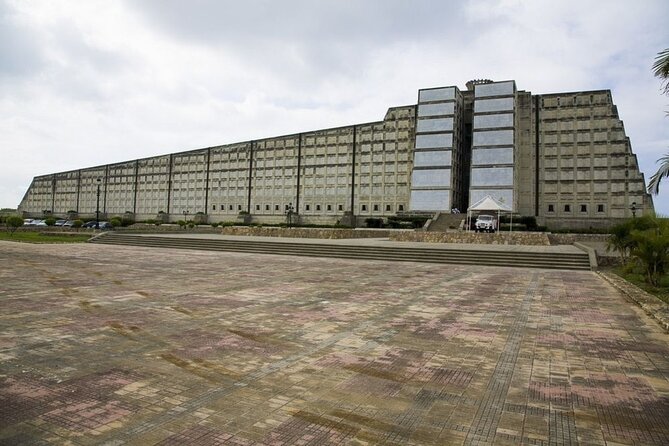
After the cathedral, you’ll reach the National Pantheon. This site functions as a mausoleum holding the mortal remains of prominent figures in Dominican Republic history. The tour notes that the enclosure has around 36 empty space markers—an interesting detail because it hints at how memory and national identity are curated over time.
This stop is free of admission, which makes it an easy win. In just 15 minutes, you can understand the purpose of the place: it’s not a casual historic building, it’s a national marker. If you care about how countries tell their stories—who gets honored and how—this is the kind of stop that pays off.
One drawback to consider: mausoleums and memorial spaces can be more reflective and rules-based than typical sightseeing. If you’re the kind of person who likes to move fast and keep everything casual, you might find the tone different here. But if you prefer meaning over just photos, this is a good moment on the route.






Museo de las Casas Reales: two 16th-century palaces, one clear theme
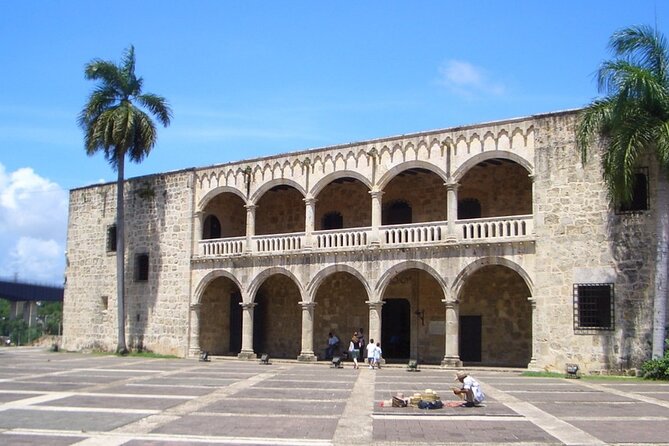
The Museum of the Royal Houses (Museo De Las Casas Reales) is housed in two palaces dating from the 16th century. It was previously connected to the era of the Royal Palaces when the region functioned under the Captaincy General and the provincial administration. On this stop, you’ll get time to understand why this museum matters in the broader Colonial Zone story.
Admission for this museum is not included. So again, the question is whether you want interior time. The guided stop gives you about 15 minutes here, which is enough to orient you, read key context, and decide if you want to return later under your own steam.
What makes this stop valuable is that it shifts your focus from religion and national memory to administration and daily governance. Churches and pantheons answer big questions about belief and identity. The Royal Houses help answer the practical question: who ran things, and where did power live?
If you’re the kind of traveler who likes to connect architecture to function, you’ll probably enjoy this part more than you expect. If you prefer only the most iconic exteriors, you can treat it as an orientation stop and decide later.
Alcázar de Colón: Columbus’s palace with Spanish roots

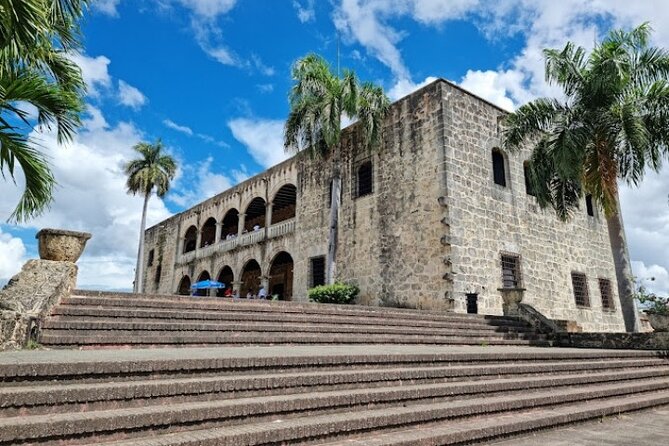
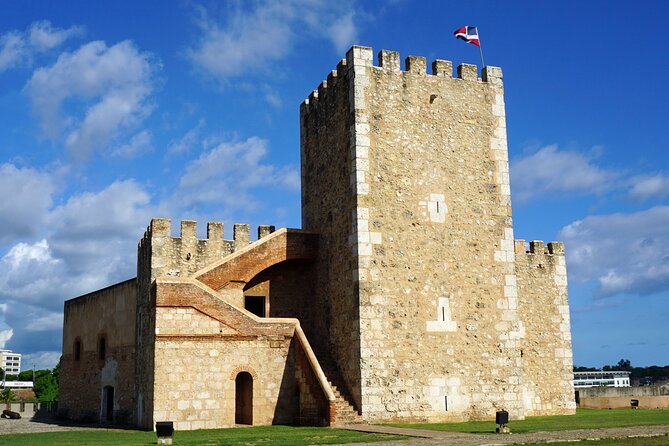
You finish with the Alcázar de Colón, also called the Alcázar of Columbus. The tour notes it was erected between 1511 and 1514. Even better, it includes a detail many people never hear: the building design took inspiration from a previously existing castle in Mancera de Abajo, Salamanca, Spain, where there are still ruins.
This is where the Colonial Zone stops feeling like a local story and becomes part of a bigger Atlantic network. The connection to Spain helps explain why certain styles, materials, and ideas traveled across the ocean.
Admission is free for this stop, and it’s about 15 minutes—long enough for a careful look, but not so long that you feel boxed in. I like it as a closing point because it gives you a visual “anchor” tied to the Columbus name. Even if you’re not a history specialist, the building is distinctive and easy to remember.
How the small-group pace works on real streets
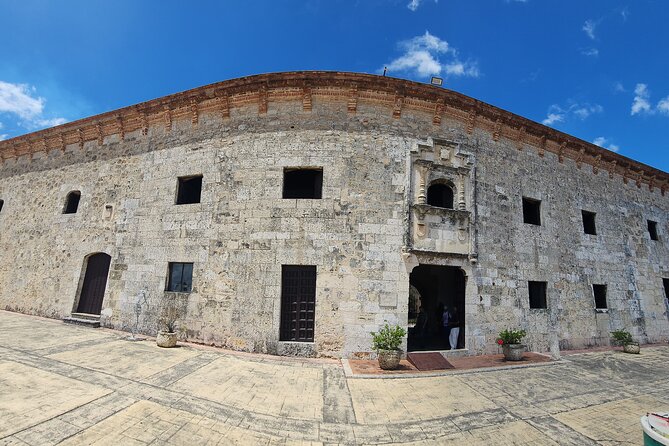
The tour caps at 15 travelers, which changes the experience in subtle ways. You can usually stay closer to the guide. You can hear explanations without playing the back-row game. And you’re less likely to lose the group on narrow sidewalks or at busy intersections near the major sights.
The route also stays tight enough that the whole loop fits in 90 minutes. That’s a big deal in the Colonial Zone because once you’re outside the core, it can feel like extra walking for marginal payoff—so this format keeps the energy focused on the most iconic monuments.
Still, it’s a walking tour, so you’ll want shoes that handle uneven pavement and lots of standing. Plan to do a bit of “look and read” at each stop, not just point-and-click sightseeing.
What the guide should do for you (and why Medina comes up)
One of the most praised elements of this tour is the guide’s ability to explain things clearly and help you understand what you’re seeing. A guide like Medina is specifically called out as well informed and helpful, with added recommendations for museums you can visit later.
That matters because the Colonial Zone is full of “you see it, but don’t know what it means” moments. When the guide connects the dots—how the sites relate, what the names signify, why the buildings exist in the first place—you end up with a mental map. Then, later on your own, you can recognize details without needing someone next to you.
So when you book, treat this as a chance to ask questions. If there’s a monument you’re curious about, bring it up early. With a group size under 15, you’re more likely to get a real answer instead of a quick “yes, nice” response.
Admissions and time: plan your money and your priorities
Two stops have admissions not included: the Catedral Primada and the Museo de las Casas Reales. The others on this loop are free: Parque Colón, National Pantheon, and Alcázar de Colón.
The practical takeaway: if you want interior time at the cathedral and the museum, budget for those entrances before you go. If you’re fine with exterior viewing and quick orientation, you can keep costs down.
Also, don’t expect tons of free-roaming time. Each stop is timed—about 15 minutes for the shorter sights and about 20 for the cathedral—so you’ll want to decide quickly what you want to do when you arrive. That’s normal for a guided walking circuit and part of what makes it good value.
Weather and comfort: small prep, big payoff
This tour requires good weather. If the weather turns, they’ll offer a different date or a full refund. That means your experience is tied to walking conditions, so wear gear that handles heat and light rain without drama.
I recommend:
- comfortable walking shoes
- a small water bottle
- sunglasses or a hat
- a light rain layer if the forecast looks questionable
Even in good weather, expect to stand and look for details. The more comfortable you are, the more you’ll notice the architectural features and the guide’s explanations.
Who this tour is best for
This is a strong fit if you:
- want a first taste of Santo Domingo’s Colonial Zone
- like history but don’t want to plan every stop alone
- prefer a guided walk with short, focused stops
- want a small group experience with time for questions
It’s also a good choice if you’re trying to build a plan for later. A guide’s recommendations for other museums can help you decide what to prioritize once you’re done with the walk.
If you’re in “I only want interiors” mode and hate short stops, you might feel limited. But if you like seeing how everything fits together, you’ll likely find the pace just right.
Should you book this Colonial Zone walking tour?
I’d book it if you want a structured, high-value introduction to the heart of Santo Domingo. For $25, you’re not just paying for time on a sidewalk—you’re paying for the guide’s ability to connect what you see at the Catedral Primada, National Pantheon, Casas Reales, and Alcázar de Colón.
Book it especially if you value clear explanations and you’re curious how colonial-era sites connect to modern Dominican identity. The fact that the experience is capped at 15 people and uses a guide-led format makes it feel practical, not crowded or chaotic.
Pass or adjust your plan if you know you only care about paid interiors. With admissions not included at the cathedral and the museum, you’ll need to choose whether to add those costs and whether you want more time than this walk provides.
FAQ
How long is the Colonial Zone historical walking tour?
It runs for about 1 hour 30 minutes.
What does the tour cost?
The price is $25.00 per person.
Is the tour admission-free for all stops?
Not all stops are admission-free. The cathedral (Catedral Primada de las Américas) and the Museo de las Casas Reales list admission as not included, while other stops on the walk are free.
Where does the tour start and end?
You meet at the Museum of the Royal Houses, C. Las Damas, Santo Domingo 10210, and the tour ends back at the same meeting point.
How large is the group?
The tour has a maximum of 15 travelers.
What happens if the weather is bad?
The tour requires good weather. If it’s canceled due to poor weather, you’ll be offered a different date or a full refund.