REVIEW · SANTO DOMINGO DAY TRIPS
Historical Tour in the Colonial City of Santo Domingo
Book on Viator →Operated by Coprixa Travels · Bookable on Viator
Santo Domingo’s Colonial Zone is made for walking, and this tour keeps you on the move. I like the tight guide-led route through major landmarks, and I also like that the commentary is meant to be detailed enough to make the sights feel connected rather than random stops. You’ll spend your time inside the UNESCO World Heritage Area at a pace designed to actually explain what you’re seeing.
My second favorite part is the mix of stops: you get sacred architecture at the Catedral Primada, civic power and royal residence history at the Museum of the Royal Houses, and Columbus-era architecture at the Alcázar de Colón. It’s a solid way to build a first-time mental map of the city without needing to plan every ticket day yourself. One possible drawback: if you prefer a very lively, high-energy guide style, the experience can feel a bit calm, even when the facts are strong.
In This Review
- Key highlights to look for
- Starting at Plaza de la Hispanidad for an easy Colonial Zone orientation
- Parque Colón: the plaza that sets the tone
- Catedral Primada de las Américas: a major spiritual anchor
- National Pantheon: mausoleum history with about 36 empty spaces
- Museo de las Casas Reales: royal houses in two 16th-century palaces
- Alcázar de Colón: Columbus’ fortress-style palace from 1511–1514
- How the 1 hour 45 minute route delivers value for $40
- What kind of traveler will enjoy this most
- A realistic watch-out: when facts are strong but energy runs low
- Should you book this Santo Domingo Colonial City walk?
- FAQ
- How long is the Colonial Zone historical tour in Santo Domingo?
- What is included in the price?
- Are entrance tickets included for all the stops?
- Where does the tour start and end?
- What should I know about transportation?
- What can affect whether the tour runs?
Key highlights to look for
- UNESCO Colonial Zone focus: designed around the preserved core with major landmarks clustered close together
- Fact-forward guiding: you’ll get explanations meant to connect each site to the bigger story
- Well-paced but short stops: about 15–20 minutes per highlight so you cover more ground fast
- Good value timing: 1 hour 45 minutes hits several big names without burning a whole day
- Ticket planning matters: some sites are free, while others have separate admissions not included
Starting at Plaza de la Hispanidad for an easy Colonial Zone orientation
Most days, the hardest part of seeing Santo Domingo’s old center is figuring out where to start and how to stay oriented. This tour begins at Plaza de la Hispanidad (also listed with an address near C. La Atarazana 2), which is a practical launch point because it’s in the historic core. The activity also ends back at the same meeting point, so you’re not left trying to navigate afterward.
You’ll likely appreciate the mobile ticket approach here, too. With a tour like this, being able to present your ticket from your phone saves time, especially when you’re bouncing between major buildings. And since this is a private tour/activity (just your group), you can move with less friction than a big open-group bus day.
One more value note: while the guide service is included, the tour does not include private transportation. That’s not a deal-breaker, but it means your day plan should assume you’re walking in the Colonial Zone area and using local transit or being already in the neighborhood.
You can also read our reviews of more city tours in Dominican Republic
Parque Colón: the plaza that sets the tone
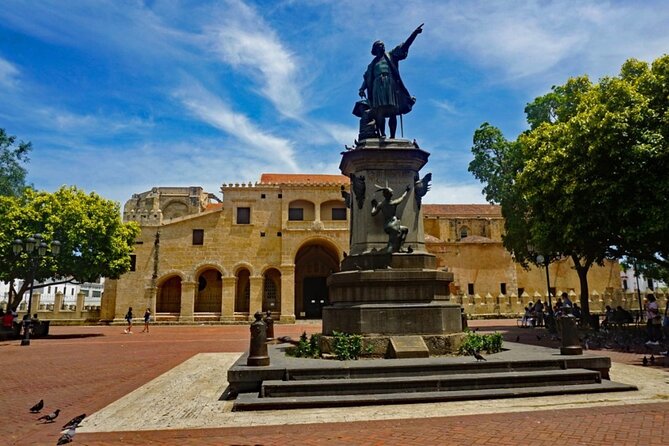
You kick off in Parque Colón, and you get the benefit of starting in the place that functions like the epicenter of the Colonial City. It’s also a central recreation space, so it doesn’t feel like you’re dropping straight into museum mode. In about 15 minutes, your guide can usually help you spot how the monuments cluster around you, which makes the rest of the walk easier to follow.
This first stop is also free, and that matters for value. When an experience starts with a landmark you can enter without paying extra, it helps the overall pricing feel more balanced. Even if you’re not trying to spend every minute taking photos, this is the moment to slow down mentally and understand you’re in the preserved historic heart of Santo Domingo.
Practical tip: wear shoes you can walk in for the whole route. The time at each stop is short, so comfort becomes your best friend.
Catedral Primada de las Américas: a major spiritual anchor
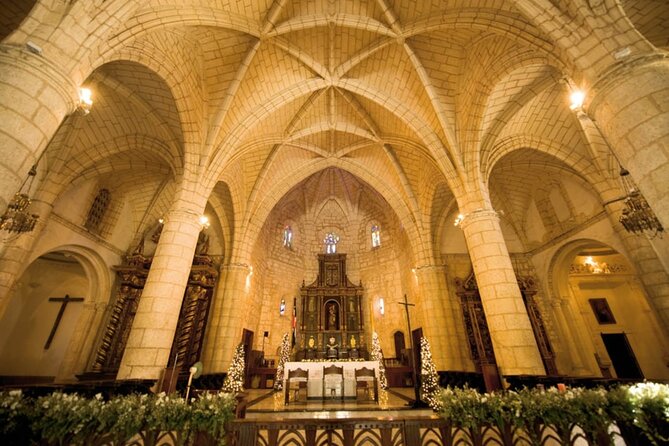
Next up is Catedral Primada de las Américas de Santo Domingo, scheduled for around 20 minutes. This cathedral and minor basilica is consecrated to Saint Mary of the Incarnation, also known as the Annunciation. That single detail helps you understand why this building has historically mattered beyond architecture.
Plan ahead for the fact that admission is not included for this stop. If you want the tour to flow without delays, have your payment method ready, and don’t wait until the last second to think about tickets. For me, it’s one of those “you’re going to want to see it closely” places, so paying attention to the ticket step is worth it.
What you’ll get during this time is typically the kind of guided explanation that helps you read a big landmark instead of just passing it. When you’re told what it’s dedicated to and what role it plays in the city’s identity, the visit stops being a checklist box.
National Pantheon: mausoleum history with about 36 empty spaces
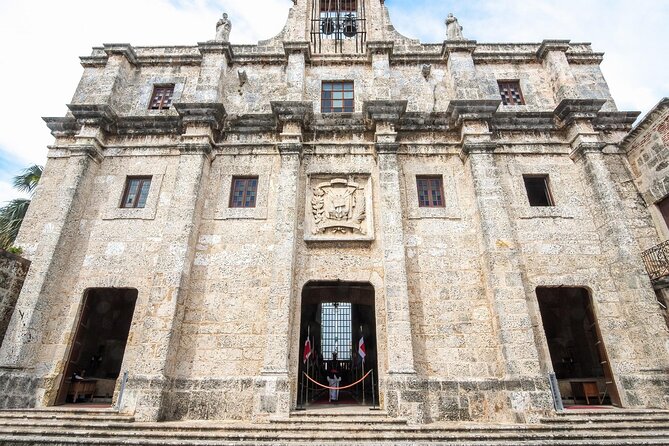
The National Pantheon is another strong stop, about 15 minutes, and it’s free. This is a mausoleum where the mortal remains of prominent figures in Dominican history are preserved. One detail that stands out is that the enclosure has around 36 empty spaces, which can make the site feel like it’s both honoring the past and shaped by what’s still to come.
I like this stop because it adds a civic layer to what can otherwise feel like only colonial-era storytelling. You’re not just looking at centuries-old buildings; you’re also seeing how Dominican national identity got built and remembered in later history. For readers who like context, this is often the kind of stop where the guide’s explanation can turn an ordinary visit into something more meaningful.
Because the time is limited, you’ll want to focus your attention on the parts your guide highlights. If you start drifting at a mausoleum, it’s easy to miss the interpretive points that make the place click.
Museo de las Casas Reales: royal houses in two 16th-century palaces
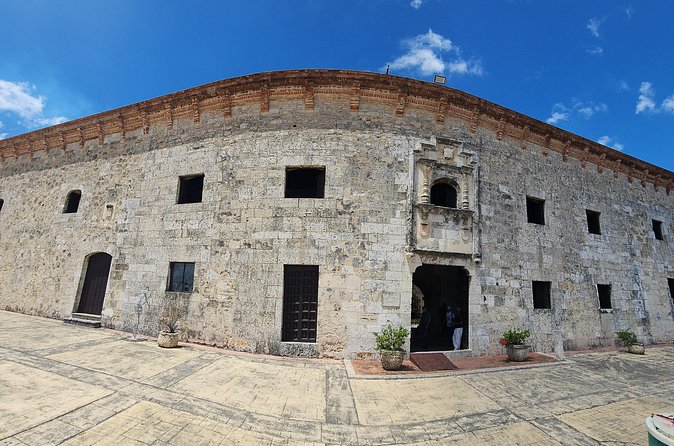
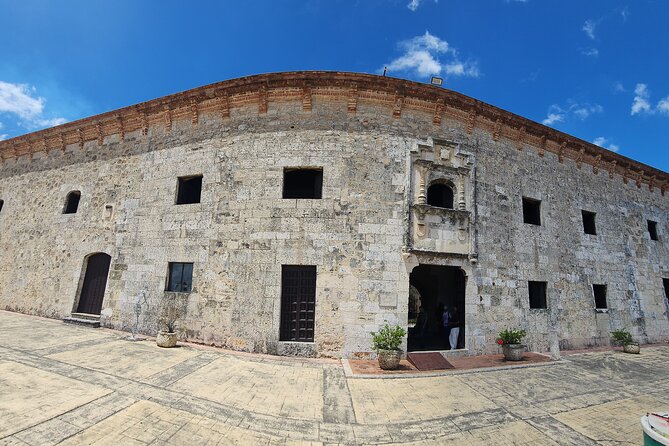
After the Pantheon, you’ll head to the Museo de las Casas Reales. This stop is scheduled for around 15 minutes, and like the cathedral, admission is not included. The museum is based in two palaces dating from the 16th century, which is the kind of setup that instantly helps you understand you’re walking through history, not just viewing it behind glass.
The name matters here. “Casas Reales” points to royal houses, and the museum includes the earlier context of the Royal Palaces from the Captaincy General era. Even if you’re not a hardcore museum person, the setting itself makes the visit worthwhile: it’s a physical reminder of how power operated in Santo Domingo.
This is also a good place to ask yourself what you came to learn. If you want a quick sense of how colonial administration and elite life shaped the city, this museum stop is built for that. If you’re hoping for a long, slow museum wander, the short time may feel limiting, but the trade-off is that you cover more iconic landmarks in under two hours.
Value-minded note: since this stop has separate admission, bring a little extra budgeting buffer mentally. You’ll pay some things at specific stops, while other major landmarks on the route stay free.
You can also read our reviews of more historical tours in Dominican Republic

Alcázar de Colón: Columbus’ fortress-style palace from 1511–1514
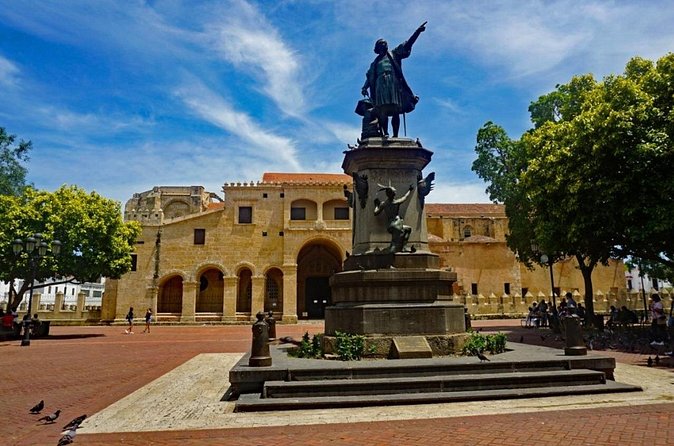
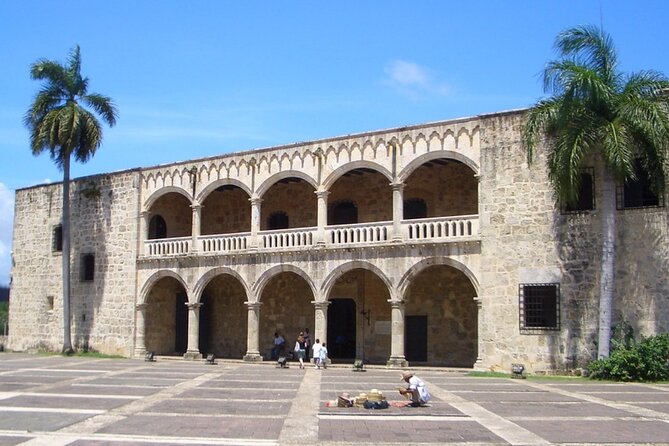
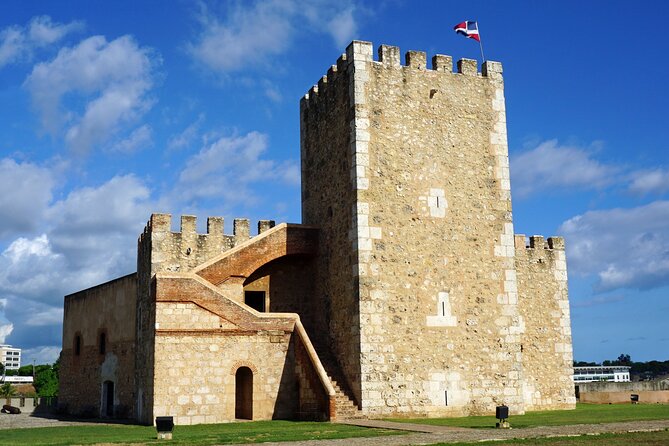
Your final major highlight is the Alcázar de Colón, also called the Alcázar of Columbus. This is scheduled for about 15 minutes and is free. It was erected between 1511 and 1514, and it takes inspiration from a previously existing castle in Mancera de Abajo, Salamanca (Spain), of which there are still vestiges in ruins.
This is the moment where the Colonial Zone’s European connections feel tangible. The guide explanation here is especially useful because it links design influence to a broader historical network. You’re not just looking at an old building; you’re learning why it resembles something that came before it in Spain, and how that influence traveled across the Atlantic.
I also like that it’s one of the stops where you get more “feel” with less ticket friction. Free admissions here help keep the tour experience aligned with the advertised price. Plus, a short stop at a building like this is often the right call in Santo Domingo, where you can easily lose time if you let yourself go overboard with lingering.
How the 1 hour 45 minute route delivers value for $40
At $40.00 per person, this tour sits in a reasonable range for a guided walk that hits multiple headline landmarks in a concentrated area. The key value piece is that tour guide service is included, and you’re getting explanations tied to each major site—Parque Colón, Catedral Primada, the National Pantheon, the Museo de las Casas Reales, and Alcázar de Colón.
The big “make or break” detail is what’s not included: private transportation and all fees and taxes. In practice, that means you’re not buying a transport-heavy sightseeing day. You’re buying a walking-focused orientation and guided interpretation. If you already plan to be in or near the Colonial Zone, that’s a smart use of time.
You’ll also notice a split in admissions: some stops are free (Parque Colón, National Pantheon, Alcázar de Colón), while others have admission not included (Catedral Primada and Museo de las Casas Reales). That doesn’t make the price bad; it just means you should think of the tour price as paying for the guidance and the route, and then plan to cover a couple of site entrances separately.
Timing matters, too. The tour is about 1 hour 45 minutes, which is perfect for travel days where you don’t want to waste half a day figuring things out. And since this is commonly booked around 16 days in advance, it’s a sign many people treat it as a reliable first stop for a Santo Domingo visit.
What kind of traveler will enjoy this most
This tour fits best when you want a guided “greatest hits” pass through the UNESCO-preserved core without a full-day commitment. If you’re visiting Santo Domingo for the first time, or if you like your history with clear structure, you’ll likely feel you got your bearings fast.
It’s also a good match if you enjoy learning the story behind places, not just taking photos. Based on the experience style, expect the guide to focus on cultural facts and professional explanations. That’s the strength. The trade-off is that the delivery can be less playful, so if you personally need a very animated guide to stay engaged, you might find the pacing a bit slow.
A realistic watch-out: when facts are strong but energy runs low
One review theme is that the guide was very experienced and knew plenty of cultural facts, which is exactly what you want for a landmark-heavy route. The downside mentioned is that the commentary may come across as a bit boring for people who prefer a more lively tone. That doesn’t mean the information is weak. It means your enjoyment may depend on your personal taste for how guides present history.
My advice: if you’re the type who loves quiet, structured explanations, you’ll probably appreciate the “learn something at each stop” approach. If you’re the type who gets impatient with long descriptions, you’ll want to stay mentally active during the walk—pick one thing per stop to focus on, and let that guide your attention.
Should you book this Santo Domingo Colonial City walk?
Yes, you should consider booking if you want an efficient, guided route through the most important sites in Santo Domingo’s Colonial Zone, with strong professional historical explanations and a manageable 1 hour 45 minute time commitment. At $40, it’s a decent value when you factor in the included guide service and the fact that several headline sites on the route are free.
I’d skip it or pair it with your own wandering if you want a long museum-style visit or if you know you get bored by calm delivery. Also remember this experience has weather dependency, and it requires a minimum number of travelers. If your trip dates are flexible, you’ll have more options if the tour has to reschedule due to conditions.
If you’re trying to pick one “first day” guided history walk in Santo Domingo, this is a solid choice. You’ll leave with a clearer sense of how the city’s colonial monuments and later national memory connect.
FAQ
How long is the Colonial Zone historical tour in Santo Domingo?
The tour lasts about 1 hour 45 minutes.
What is included in the price?
The price includes the tour guide service. Mobile ticket is provided.
Are entrance tickets included for all the stops?
No. Admission is free at Parque Colón, the National Pantheon, and the Alcázar de Colón. Admission for Catedral Primada de las Américas and the Museo de las Casas Reales is not included.
Where does the tour start and end?
The tour starts at Plaza de la Hispanidad (Spain, C. La Atarazana 2, Santo Domingo 10212) and ends back at the same meeting point.
What should I know about transportation?
Private transportation is not included, so you should plan to meet at the stated location and travel to the Colonial Zone on your own.
What can affect whether the tour runs?
This experience requires good weather and also requires a minimum number of travelers. If it’s canceled due to poor weather, you’ll be offered a different date or a full refund.