REVIEW · PUNTA CANA
Kiteboarding Lessons in Punta Cana
Book on Viator →Operated by Kiteology DR · Bookable on Viator
Kiteboarding lessons, minus the guesswork. Punta Cana is one of the Dominican Republic’s best places to learn, and this small-group course at Punta Cana Kitesurf Academy helps you progress step by step with expert coaching. If you want the thrill of flying over the water, you’ll start with wind basics and end up working toward real riding skills in just a few sessions with your instructor.
My favorite part is the way the lessons are broken into clear stages, so you’re not just “trying stuff” randomly. You’ll also like the max four-person setup, which means lots of time for hands-on corrections instead of waiting your turn.
One thing to consider: you’ll need a bit of physical effort (dragging, getting up, and water work), and you’re responsible for getting to the academy unless you choose an option that includes pickup.
In This Review
- Key points to know before you go
- Why Punta Cana Makes Sense for Learning to Kite
- The 1, 2, or 3-Day Plan: How Your Skills Actually Build
- Day 1: Wind theory + trainer kite control
- Day 2: Full-sized kite + water relaunch skills
- Day 3: Upwind progress + first waterstarts
- What Happens When You Arrive: From Safety Briefing to First Powers
- Meet the Coaching Style (Humberto and the Team)
- Where You’ll Kite: Learning Spots That Help You Improve
- Equipment, Helmet, and Safety: Less Shopping, More Practice
- Timing, Weather, and How to Think About Wind Reality
- Price: Is $215.39 Fair for What You Get?
- Logistics That Actually Matter: Getting There, Food, and What to Wear
- Who Should Book This Kiteboarding Course
- Should You Book Kiteboarding Lessons in Punta Cana?
- FAQ
- FAQ
- How long is the kiteboarding lesson each day?
- Do I need any prior kiteboarding experience?
- How big is the group?
- What’s included in the lesson price?
- Is hotel pickup and drop-off included?
- Will the lesson run in bad weather?
- What is the cancellation deadline?
Key points to know before you go
- Small group of up to 4 means more time on the water with your instructor
- 3-hour daily coaching gives you enough repetition to actually improve
- Beginner-friendly progression: wind theory to trainer kite control to waterstarts
- Helmet included keeps you focused on learning instead of shopping for gear
- Two-way radio coaching and fast feedback help you correct mistakes in real time
- Wind-based planning means they may adapt your sessions to what conditions allow
Why Punta Cana Makes Sense for Learning to Kite
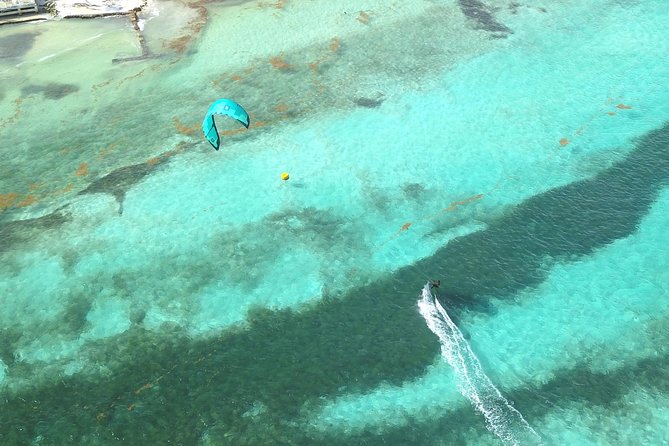
Punta Cana is the kind of place where kiteboarding isn’t just a side activity. The wind is often reliable enough that instructors can teach real skills, not just safety drills and theory. And because the area is set up for water sports, you get that practical learning vibe: get suited up, meet your coach, and spend your time practicing—not traveling all day and losing momentum.
This course is built for both brand-new beginners and people who want to sharpen technique. That matters, because kiteboarding is technical. If you’re starting from zero, you need clear explanations of wind and equipment. If you already know the basics, you need targeted practice that moves you forward without wasting time.
You can also read our reviews of more tours and experiences in Punta Cana


The 1, 2, or 3-Day Plan: How Your Skills Actually Build
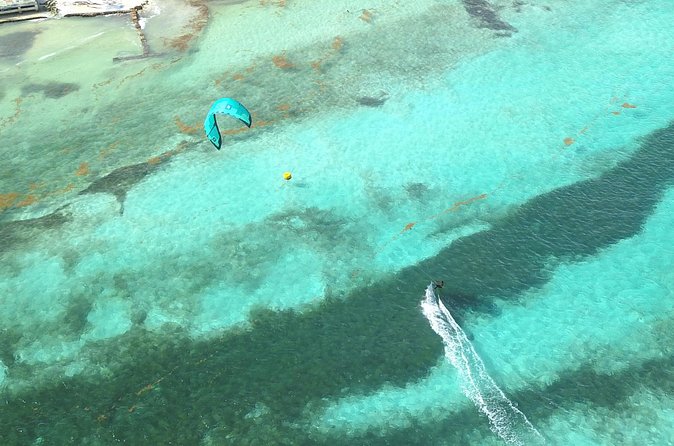
You choose your option—1 day, 2 days, or 3 days—and each day is about 3 hours. In practice, that structure is what makes the course work. You don’t cram everything into one chaotic session. You learn the next piece right after you understand the last one, which is how kiteboarding clicks.
Day 1: Wind theory + trainer kite control
Day 1 is about understanding what the kite is doing and how to handle it safely and confidently. You’ll start with the fundamentals: wind theory and the wind window (the idea that the kite has a working zone where steering and power happen). Then you move quickly into equipment basics so you know what you’re looking at and how it fits together.
Next comes the hands-on part using a trainer kite. This is where you practice piloting the kite and steering with one hand. You’re basically building muscle memory for kite control before you ever deal with full power on a board. Expect a lot of short practice loops and instructor feedback, which helps you avoid developing bad habits early.
Day 2: Full-sized kite + water relaunch skills
On Day 2, you step up to a full-sized kite. This is the day where you learn control in the water, not just on dry land or in theory. You’ll practice techniques like water relaunch (getting the kite flying again after it drops or you’re down) and downwind body dragging (building comfort with the kite pulling you while you move in the right direction).
This is also usually the day you feel that first real zoom across the water—when it stops being a lesson and starts feeling like flying. That’s the payoff for the careful work of Day 1.
Day 3: Upwind progress + first waterstarts
If you choose the 3-day option, Day 3 is where you start earning your board skills. You’ll work on more complex maneuvers such as an upwind bodydragging technique (used to recover your position), and you’ll ride the board in both directions. This is also where waterstarts come in—your first attempts at getting up onto the board and moving properly with the kite.
Even if waterstarts don’t fully click on Day 3, you’ll leave with a clearer action plan. Kiteboarding is a skill where the “why” behind your technique matters, and this progression helps you understand what to focus on next.






What Happens When You Arrive: From Safety Briefing to First Powers
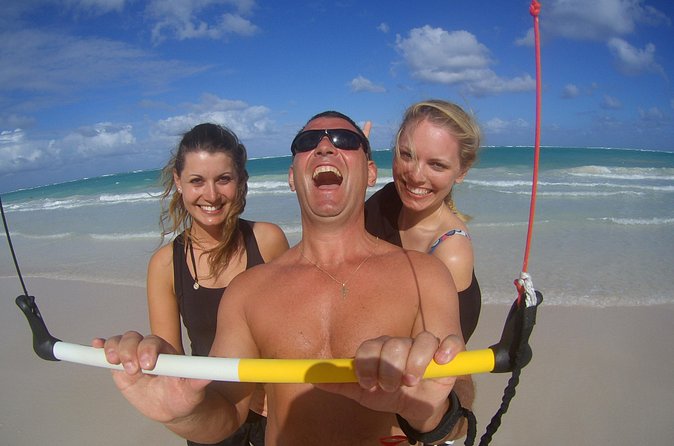
Your starting point is the Kitesurf Academy in Punta Cana. You make your own way there to meet your instructor and begin. Once you arrive, you’ll get suited up and go through a safety briefing. This is not the “quick talk and good luck” style. It’s the part that sets the tone: you learn how to handle the kite safely and how to think about your next move before you commit to more advanced riding.
Then you head out to the beach to start. The lesson flow is usually structured around instructor demonstrations followed by your practice. You won’t just watch and hope it transfers. You’ll do the movement, get corrected, and try again—often through real-time communication.
A detail I really like here: the coaching is hands-on enough that instructors can spot issues right away. In the past, people have mentioned guidance via radio systems during sessions, which is a huge help when you’re out on the water and can’t always hear everything clearly.
Meet the Coaching Style (Humberto and the Team)
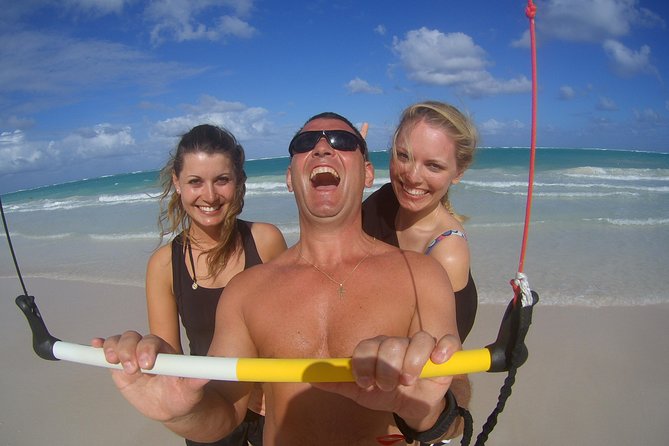
The main instructor is Humberto, and the teaching style he brings is very practical: clear communication, patient instruction, and frequent technique corrections. Multiple people highlight that he’s great at explaining what you’re doing wrong in a way that makes sense in your body, not just your mind.
You may also work with other instructors from the school’s team if needed. Names that have shown up include Marino, Nelson, Felix, Cuco, and Moreno. That variety can be a good thing because different coaches may emphasize different aspects of technique. The core stays the same: skill progression, safety, and lots of time practicing.
And if you’re hoping for more than basic “learn to stand” progress, this is the kind of operation that tends to focus on your specific stage. People have described getting consistent, precise corrections throughout the session—which is exactly what you want when you’re learning something as technical as kiteboarding.
Where You’ll Kite: Learning Spots That Help You Improve
Punta Cana has several kite-friendly areas, and what matters isn’t just the view—it’s how the water behaves. People have described sessions near Pearl Beach Club, with knee-deep water that’s ideal for learning and repeating fundamentals. Others have talked about spots like Las Salinas and Ulvero Alto, where conditions can offer the right mix of space and wind for progression.
A key point for your planning: conditions change. If the wind is better at one spot than another, you’ll likely get moved to where the instructors can run the lesson safely and effectively. One reviewer even noted being invited to Las Salinas when wind conditions weren’t ideal at their initial location. That adaptability is a big deal for learning, because the worst case is wasting your lesson time when the wind is weak or in the wrong direction.
Equipment, Helmet, and Safety: Less Shopping, More Practice
Included with the course is helmet use and a professional guide. That takes away a common headache for adventure sports: you don’t have to figure out what gear is safe or correct before you arrive.
Gear quality matters too. People have mentioned new equipment and having a variety of kite sizes, which is important because the right kite size is what helps you learn without getting overwhelmed. If you’re smaller, newer, or still building control, having the right kite size can be the difference between progress and frustration.
Timing, Weather, and How to Think About Wind Reality
This activity operates in all weather conditions, but it also requires good weather. In other words: you’ll likely still dress for weather and show up prepared, but if conditions aren’t safe or windy enough to kite properly, you should expect a reschedule or refund offer rather than a halfhearted lesson.
For you, the smartest approach is to plan flexible days. Kiteboarding is wind-led. If you’re coming during a week when conditions are unpredictable, your patience pays off. If you’re lucky and the wind cooperates, you’ll get those full practice windows that make the course feel worth it.
Also note your timing: the lessons are scheduled as daily 3-hour sessions within your chosen 1-, 2-, or 3-day option. Because you’re working in a multi-day format, you’ll benefit from repeating the key steps. That’s why the course structure tends to work better than a single short “try it once” lesson.
Price: Is $215.39 Fair for What You Get?
At $215.39 per person (for the experience option shown), you’re paying for real instruction time with a professional coach, plus use of safety equipment support (helmet). You’re also paying for small-group learning with a max of four people, which usually means better teacher-to-student attention.
Here’s how to judge the value without overthinking it:
- If you’ve tried kiteboarding before and struggled, this type of structured instruction can save you from weeks of repeating the wrong thing.
- If you’re brand new, the cost becomes worth it when you realize how much can go wrong if you skip wind basics, safety steps, and kite control fundamentals.
- The 1-, 2-, or 3-day choices matter. If you want the biggest jump in skill, the 3-day option is the one that gives time for wind theory + control + real riding attempts.
If you’re the type who learns best by doing (and getting corrected fast), this is the kind of value that feels obvious once you’re out on the water.
Logistics That Actually Matter: Getting There, Food, and What to Wear
Your meeting point is in La Altagracia Province, and you’ll go directly to the Kitesurf Academy. Unless you select an option that includes hotel pickup and drop-off, you should plan to handle your own transport.
Food and drinks aren’t included. So build in time (or budgeting) for a snack and water before or after your sessions. Kiteboarding is physical, and “I’ll eat later” can turn into “I’m exhausted and can’t learn anymore.”
You’ll want to dress appropriately for weather and conditions since the activity runs outside. Bring the kind of clothing you don’t mind getting wet, and expect you’ll be moving a lot through sand and water.
Who Should Book This Kiteboarding Course
This one is a great fit if:
- You’re a complete beginner and want instruction that starts with wind and equipment control.
- You already kite and want a clear pathway toward upwind recovery and waterstarts.
- You prefer small groups where you get frequent feedback rather than waiting for attention.
It’s also a solid choice for anyone with moderate physical fitness. The sport involves water work, dragging, and getting into positions, so you don’t need to be an athlete, but you do need to be comfortable moving with purpose in the ocean environment.
If you’re hoping for a luxury beach day with a casual demonstration, you might find it intense. This is practice time.
Should You Book Kiteboarding Lessons in Punta Cana?
I’d book this if you want a real progression—not just a one-time thrill. The 1-, 2-, or 3-day structure, the small-group format, and the focus on wind and technique are exactly what make kiteboarding less scary and more learnable.
Skip it (or at least reconsider the dates) if you only have one short window and you hate weather uncertainty. Kiteboarding depends on wind and safe conditions. If you’re flexible and ready to repeat skills over a few days, that same wind dependency becomes your friend.
FAQ
FAQ
How long is the kiteboarding lesson each day?
The course includes a daily 3-hour class. You choose a 1-, 2-, or 3-day option.
Do I need any prior kiteboarding experience?
No experience is necessary. The lessons are tailored to complete beginners as well as more experienced riders.
How big is the group?
The tour has a maximum of 4 travelers, so you get more personalized coaching time.
What’s included in the lesson price?
A professional guide is included, and helmet use is included as well. Food and drinks are not included.
Is hotel pickup and drop-off included?
Hotel pickup and drop-off are not included unless you choose the option that includes it. Otherwise, you make your own way to the academy.
Will the lesson run in bad weather?
It operates in all weather conditions, but it does require good weather. If it’s canceled due to poor weather, you’ll be offered a different date or a full refund.
What is the cancellation deadline?
You can cancel for a full refund up to 24 hours in advance of the experience start time. Canceling less than 24 hours before start time does not get a refund.