REVIEW · SANTO DOMINGO DAY TRIPS
Walking Tour from Santo Domingo City
Book on Viator →Operated by Runners Adventures · Bookable on Viator
Old Santo Domingo packs a punch. This 3–4 hour guided route makes the First City of the Americas easy to understand fast, with UNESCO Ciudad Colonial highlights and air-conditioned bus comfort between stops.
I especially like how the pace is structured: you get expert context at the big monuments, then a quick street stroll to reset your eyes in between. The tour also works well if you’re short on time but want more than a drive-by photo session.
I also like that admission tickets are included at several stops, plus you build in a sit-down break at La Atarazana with the traditional plate called la bandera dominicana. The main catch is the schedule: with fixed time blocks, you’ll have to accept a bit of a “see it, then move on” feeling even though each stop is worth it.
In This Review
- Key highlights worth showing up for
- A fast way to understand Santo Domingo’s colonial core
- Price and what $60 buys you (beyond the obvious)
- Where you start (and why arriving early helps)
- Stop 1: Alcázar de Colón, the fortified European palace
- Stop 2: Primada de América Cathedral (and what 1546 really means)
- Stop 3: Calle Las Damas, Santo Domingo’s oldest back street
- Stop 4: Museo de las Casas Reales for maps and tapestries
- Stop 5: La Atarazana and la bandera dominicana
- How the guided bus-and-walk timing feels in real life
- Tips to get more out of every stop (without overthinking it)
- Who should book this tour, and who should skip it
- Should you book this Santo Domingo walking tour?
- FAQ
- How long is the tour?
- What does the tour cost?
- What stops are included?
- Are any entrances or meals included?
- Where do I meet the tour, and when does it start?
- How big is the group?
- What if the weather is bad or I need to cancel?
Key highlights worth showing up for
- Ciudad Colonial UNESCO stops built into one efficient route
- Air-conditioned bus transfers between major sights
- Entrance tickets included for key monuments and the colonial museum
- Calle Las Damas for a short walk through Santo Domingo’s oldest lane
- La Atarazana meal with la bandera dominicana included in the tour time
A fast way to understand Santo Domingo’s colonial core
Santo Domingo can feel big on a map, but it becomes manageable when you follow the old streets toward the major colonial landmarks. This tour is designed for exactly that: you spend a few hours tracing routes that lead you toward major monuments while still getting some street-level texture.
You’ll start in the historic center and move through the heart of the Ciudad Colonial area, where Spanish-era power and faith are visible in stone. And even though you’re going to indoors places, the day is still built around walking moments, like the classic stroll along Calle Las Damas.
If you like history that you can actually point to, this format helps. Instead of reading about the New World’s early days in a book, you see the places tied to those beginnings and hear the story in the same order you encounter the architecture.
You can also read our reviews of more walking tours in Dominican Republic

Price and what $60 buys you (beyond the obvious)
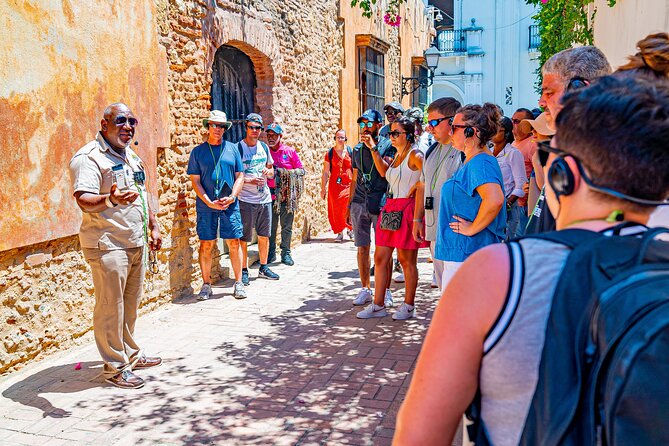
At $60 per person for about 3 to 4 hours, the value comes from what’s included, not just the sightseeing. You’re paying for a guided route plus transport by air-conditioned bus, and the schedule includes entry for multiple major stops.
Specifically, admission tickets are included for:
- Alcázar de Colón
- Catedral Primada de las Américas
- Museo de las Casas Reales
Then there’s La Atarazana, where you’re included for the stop tied to the traditional dish la bandera dominicana. That matters because a museum plus a meal usually costs more than a simple walking tour.
The group cap is also a useful part of the price equation. With a maximum of 45 travelers, you’re less likely to feel lost in a huge crowd. It still isn’t a private experience, but it’s the kind of size where a guide can keep momentum without turning it into a herding exercise.
And because this tour uses a mobile ticket, you avoid the hassle of hunting for printed passes. For many people, that alone makes the booking feel smoother once you’re on the ground.
Where you start (and why arriving early helps)
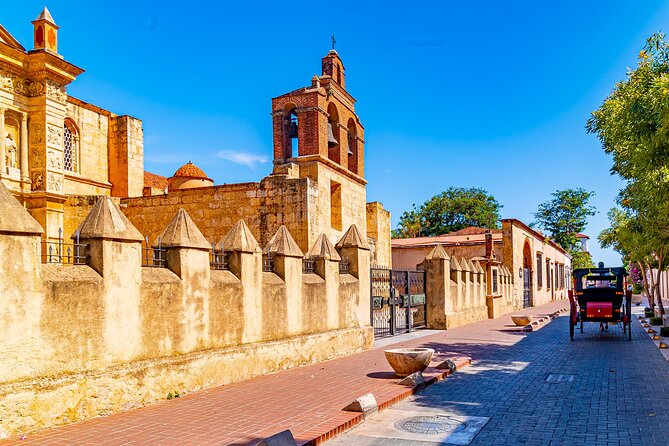
You begin at the Museum of the Royal Houses on C. Las Damas, Santo Domingo (10210). The tour starts at 10:00 am, and it ends at C. La Atarazana 5 in Santo Domingo (10212).
That start point is handy because it’s already in the historic grid you’ll be exploring. It also sets you up for the day’s logic: you start near the colonial lane area, then you move toward monuments that anchor the Spanish presence, then you finish with a meal stop.
Since the total time is limited, I’d treat this like a real morning plan, not a casual stroll. Be at the meeting point with a little buffer so you don’t feel rushed when the group assembles and transitions to the next stop.
You’ll also want to keep an eye on weather. This experience requires good weather, and if it’s canceled for poor conditions you’ll be offered another date or a full refund. In practice, that means your best bet is to check the forecast the night before and have a realistic expectation if rain rolls in.
Stop 1: Alcázar de Colón, the fortified European palace
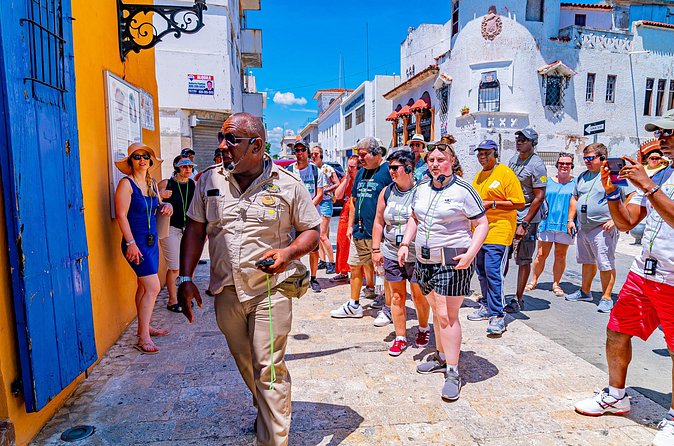
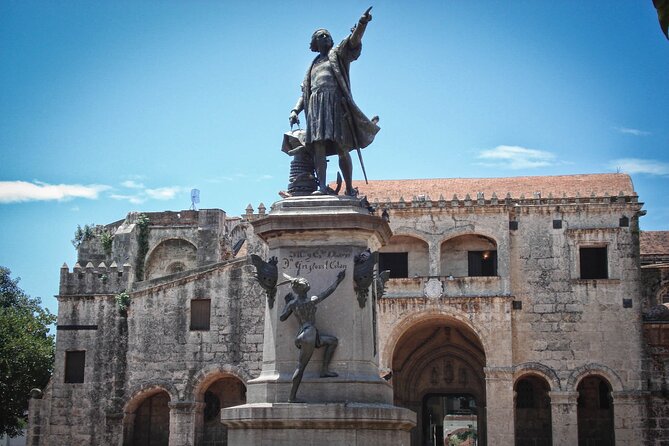
The day kicks off with Alcázar de Colón, a site that instantly frames Santo Domingo’s early colonial story. This palace is described as the first fortified European palace built in the Americas, and it sits within the Ciudad Colonial UNESCO World Heritage area.
Plan for about 35 minutes here. That’s not enough time to read every label slowly, but it’s a solid amount for getting the big ideas: how European power was expressed in architecture, and how that power took root in the New World.
What I’d focus on during your time here is the feel of the place: a fortified palace is not just “pretty old building” material. It’s built to control space and signal authority. When you stand in the right viewpoint, you understand why it became a landmark worth protecting in the UNESCO framework.
A realistic consideration: with only 35 minutes, this stop is best if you’re willing to prioritize the highlights rather than chase every detail.
Stop 2: Primada de América Cathedral (and what 1546 really means)
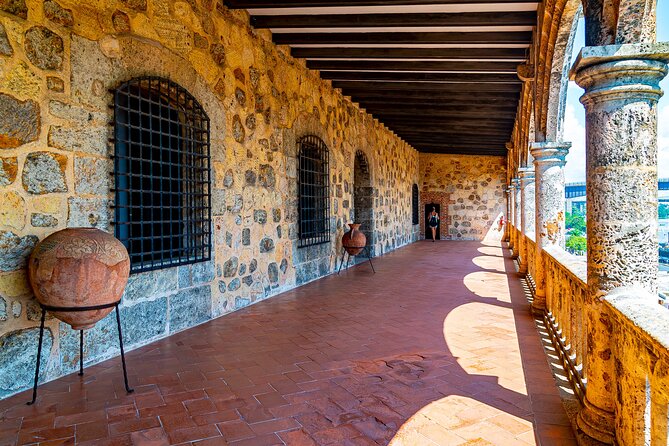
From the palace, you head to Catedral Primada de las Américas de Santo Domingo. This is the “big faith building” moment of the tour, and it has a strong claim to early New World prominence: it was declared in 1546 as the first cathedral of the New World.
You’ll have about 45 minutes at this stop, which gives you breathing room to enter and absorb the scale. You’ll likely spend this time listening to your guide’s explanation and then taking a slower look around while everything is still fresh in your mind.
This stop is valuable because cathedrals tell a different kind of story than palaces. Palaces shout political order; cathedrals show cultural and religious structure. Together, they connect the practical and spiritual sides of the early colonial era.
One drawback to consider is that you’ll be indoors, part of the way, and your time is still time-boxed. If you’re the type who wants to sit and think for a long stretch, you may wish you had more than 45 minutes—but you’re also getting the rest of the route, so it’s a trade you’re choosing when you book.
You can also read our reviews of more city tours in Dominican Republic



Stop 3: Calle Las Damas, Santo Domingo’s oldest back street
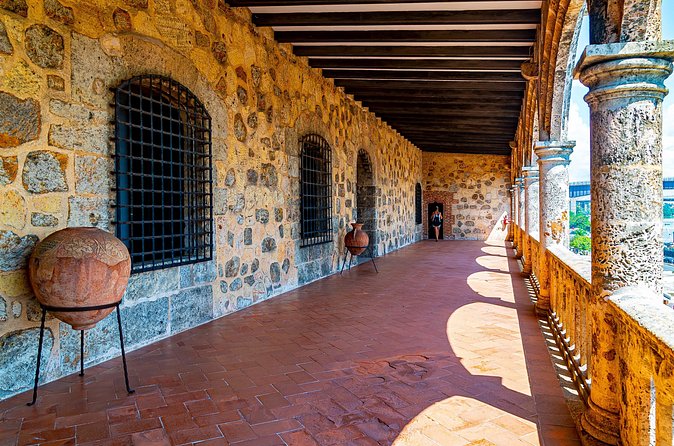
Next comes a short, sweet reset: Calle Las Damas. This lane is described as the oldest back street not only in the Dominican Republic but also in the Americas, and it preserves a large number of monuments in the surrounding area.
You only get about 10 minutes here, but that’s enough for the key experience: walking a narrow colonial lane and seeing how close the historic context sits to street life. This is the kind of stop that helps your brain connect the “monument locations” you just learned about to the real layout of the city.
Also, because you’re on foot here, you get better photo angles and a better sense of what it means to move through old Santo Domingo. It’s a compact stretch, but it changes the feel of the day.
The consideration: ten minutes sounds tiny because it is. If you want to meander, this is the stop where you’ll feel the limitation most.
Stop 4: Museo de las Casas Reales for maps and tapestries
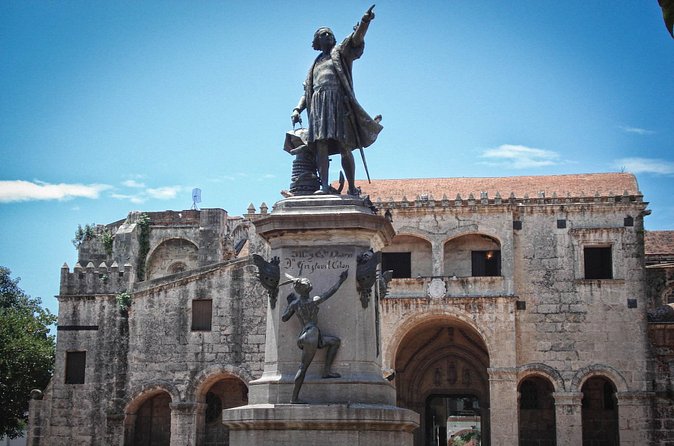
After the street, you shift into Museo de las Casas Reales, with about 35 minutes inside. This museum is where you get objects that help explain how the colonial era worked.
The highlights mentioned include maps and ancient tapestries, plus other objects connected to the colonial times of Santo Domingo. That combination matters because maps show how people imagined and managed space, while tapestries (and similar artifacts) show lifestyle, symbolism, and what kinds of visuals Europeans brought with them.
This is one of those stops where a guided route makes a difference. If you go in without context, you might see artifacts; with a guide, you get the story of what they represent and why they were collected or preserved.
The main drawback is simple: if museums aren’t your thing, you might find this the least fun stop. But even if you’re not a “museum person,” maps are usually a fast way to build understanding quickly.
Stop 5: La Atarazana and la bandera dominicana
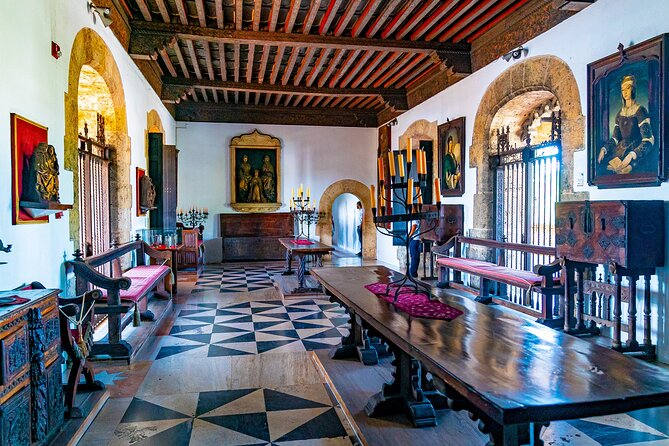
The tour ends at La Atarazana, and this is where the day shifts from walking-and-looking to tasting-and-recovering. You’ll spend about 1 hour here, and the stop includes the traditional Dominican dish called la bandera dominicana.
This meal stop is more than a nice break. It’s a practical way to end the tour with energy still in your body, not only with photos on your phone. After cathedral and museum time, having a set hour for food helps you reflect on what you just saw while you slow down.
One more reason this makes sense for a value-focused tour: if you were doing this itinerary on your own, you’d still need to solve the meal problem somewhere along the way. Here, the meal is built into the schedule and included with the experience time.
As a consideration, think about your appetite and timing. One hour means you can settle, but it also means you’ll likely eat at a set time as part of the group flow.
How the guided bus-and-walk timing feels in real life
Even though it’s called a walking tour, you’re not spending the whole time on your feet. The tour includes travel by air-conditioned bus, which is smart in a city with big distances between key monuments.
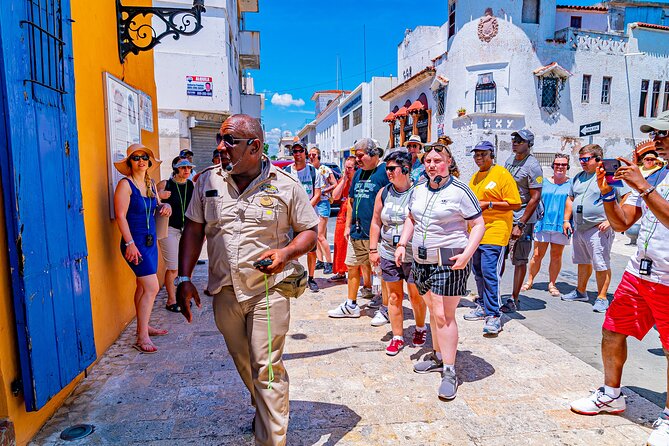
The walking time is mostly concentrated in the street portions, especially the short stroll on Calle Las Damas. The rest is a rhythm of entering sites, listening, looking around, and then moving on.
The maximum group size of 45 is a key factor in how smoothly this feels. It’s large enough to be lively, small enough that you’re generally not separated from the guide all the time. Still, the day is structured, so you’ll want to stay attentive at transitions. If you drift, you may feel like you’re playing catch-up.
And since your time is divided into set blocks, you’ll get the best experience if you decide in advance what you want most. If your priority is the major landmarks—palace, cathedral, museum—this tour hits the mark efficiently. If your priority is lingering deeply at one place, you’ll feel the time pressure.
Tips to get more out of every stop (without overthinking it)
Here are the practical moves I’d make for a tour like this:
- Charge your phone fully before you go. The tour uses a mobile ticket, and you don’t want to scramble once you’re at the start point.
- Wear comfortable shoes. Even if walking time is short, you’ll be on foot during the street stop and moving through historic areas.
- Arrive a few minutes early at the Museum of the Royal Houses meeting point. This tour is time-boxed, so early beats stressful.
- Be ready for indoor viewing at the cathedral and museum. This is where your guide’s explanation will matter most.
- Use the meal hour as your reset. If you’re hungry, your attention drops at monuments. La Atarazana gives you that breathing room.
Also, because the experience depends on good weather, don’t treat your trip date as casual if rain is expected. If weather is unstable, keep flexible plans for later that day.
Who should book this tour, and who should skip it
This is a great fit if you:
- want a guided introduction to Santo Domingo’s colonial core in about half a day
- like seeing multiple landmark types—palace, cathedral, museum, historic street—rather than only one category
- appreciate value that includes admission tickets and a meal rather than paying for everything à la carte
- prefer small-group structure up to 45 travelers instead of a chaotic crowd
You might choose something else if:
- you want an unhurried, self-paced deep dive at just one site
- you dislike museum visits even when the group schedule includes only about 35 minutes
- you’re planning to arrive late or you need lots of flexibility during the morning
Should you book this Santo Domingo walking tour?
If you’re deciding whether this is the right use of your time in Santo Domingo, I think it is—especially for first-timers or people who want a structured, efficient route. The big reason: you’re not only paying for the guide. You’re also getting admission tickets for major monuments and a meal stop at La Atarazana with la bandera dominicana.
Book it if you want a “big hits” route that still includes walking the old street grid. Skip it only if you know you want lots of time to linger, or you’d rather build your own plan without time-boxed stops.
The reported overall quality is strong, with 94% recommendation and a 4.7 rating, so the odds are good that you’ll feel your time was well spent. Just show up on time, keep your pace with the group, and you’ll leave with a clearer sense of why Santo Domingo became such an anchor point for the Americas.
FAQ
How long is the tour?
The Walking Tour from Santo Domingo City lasts about 3 to 4 hours.
What does the tour cost?
It costs $60.00 per person.
What stops are included?
The tour includes Alcázar de Colón, Catedral Primada de las Américas, Calle Las Damas, Museo de las Casas Reales, and La Atarazana.
Are any entrances or meals included?
Admission tickets are included for Alcázar de Colón, Catedral Primada de las Américas, and Museo de las Casas Reales. La Atarazana includes the traditional dish la bandera dominicana. Calle Las Damas is free.
Where do I meet the tour, and when does it start?
You meet at the Museum of the Royal Houses, C. Las Damas, Santo Domingo 10210, and the tour starts at 10:00 am.
How big is the group?
The tour has a maximum of 45 travelers.
What if the weather is bad or I need to cancel?
The experience requires good weather. If it’s canceled due to poor weather, you’ll be offered a different date or a full refund. You can cancel for free up to 24 hours in advance for a full refund.